

Rebuild cost vs market value in Ireland is not a matter of two figures pointing at the same thing from different angles. They measure entirely different things, only one belongs on your insurance policy, and the wrong one feels more authoritative. Market value appears on mortgage documents, estate agent reports, and lender valuations. It looks like the right number.
It is completely wrong for insurance purposes, and the property owners who find that out tend to find out in the middle of a claim, when a loss adjuster applies the Average Clause and the payout is a fraction of what was expected.
What Market Value Actually Measures
Market value is the price a willing buyer would pay a willing seller for a property in its current condition, on the open market, on a given day. That definition sounds simple, but the figure it produces is shaped by factors that have nothing to do with the physical structure of the building.
Location drives market value in ways that bear no relationship to construction cost. A commercial unit in a high-footfall Dublin location commands a significantly higher market price than an identical building in a rural county, even if the two structures would cost the same amount to rebuild.
The desirability of the address, proximity to transport links, development potential, local demand, and economic conditions all push the figure up or down independently of what the walls, roof, and floor actually cost to construct.
For commercial properties in particular, the land beneath the building can represent a substantial proportion of the total market value, often 40 to 60 percent in urban settings. That land is still there after a fire. You cannot insure it, and you do not need to rebuild it.
Market value is the right number for buying, selling, securing finance, and stamp duty. It is the wrong number for insurance.
What Rebuild Cost Actually Measures
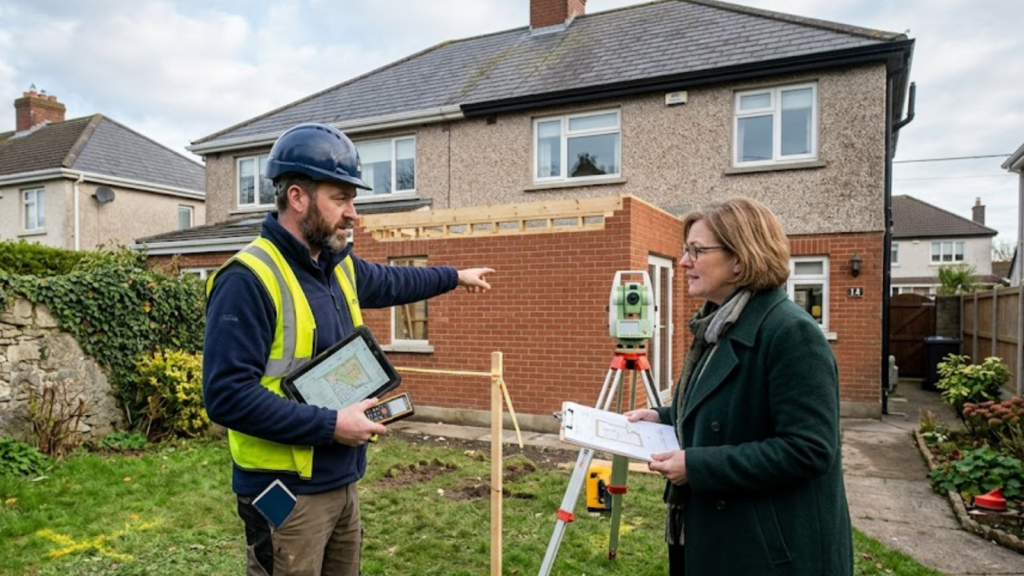
The rebuild cost, also known as the reinstatement cost, is what it would cost to demolish whatever remains of a building after a total loss and construct an equivalent structure from the ground up, compliant with current building regulations, using current labour rates and materials.
It includes demolition and site clearance, which can account for five to ten percent of the total figure on its own, as well as the full cost of the structure from foundations to roof, all mechanical and electrical installations, professional fees for architects, structural engineers, and project managers (typically ten to fifteen percent of the build cost), and VAT where applicable.
Land is excluded entirely: it survives a loss and cannot be rebuilt.
Reinstatement costs are driven by construction industry factors: material prices, the cost of labour, the availability of tradespeople, compliance requirements under current building regulations, and regional variations in each of these. They move independently of the property market.
A construction price increase does not track house price movements, and a fall in market values does not reduce what it costs to rebuild.
The Society of Chartered Surveyors Ireland, known as SCSI, publishes guidance on average rebuilding costs per square metre across different house types and regions annually. Their most recent SCSI rebuild data shows national average construction costs have risen by approximately seven percent over the past twelve months, a run of inflation that has outpaced most indexed policy values.
Is Rebuild Cost Always Lower Than Market Value in Ireland?
Most guides get this wrong in a specific way. They present the relationship as one-directional. They explain that rebuild cost is often lower than market value, because land is excluded. That is true in many cases. But it is not universally true, and assuming it is creates a specific and serious underinsurance risk.
In high-value urban markets, particularly Dublin, market value tends to exceed rebuild cost because land represents a large share of the total price. A commercial property valued at two million euro on the market might carry a rebuild cost of eight hundred thousand euro. Insuring it for market value would mean paying premiums on a sum that is over twice what you would actually need to rebuild.
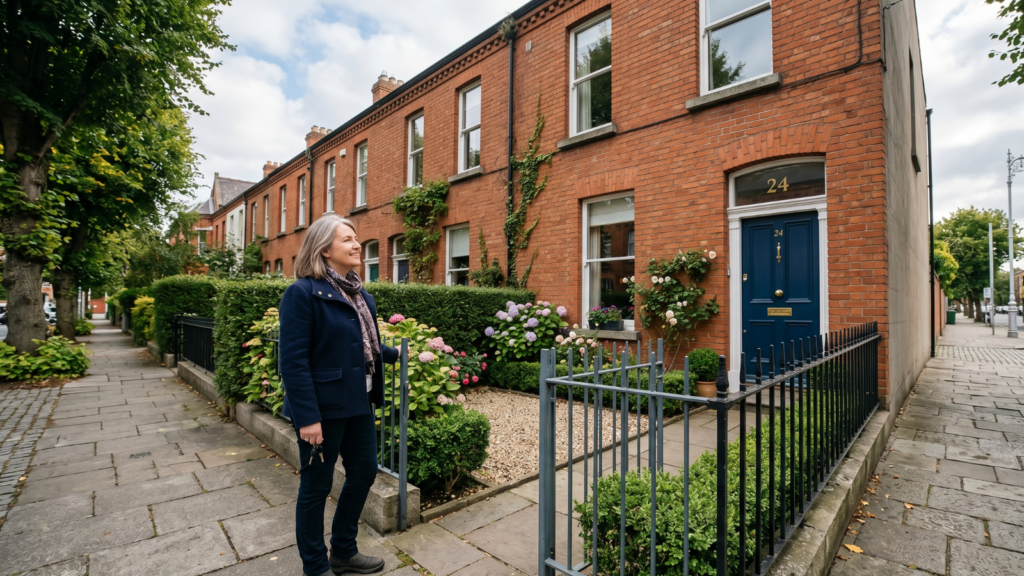
But in other scenarios, the relationship reverses. Older commercial buildings, period properties, and structures with non-standard construction methods can carry reinstatement costs that exceed their market value.
A period building with a market value of three hundred and fifty thousand euro in a depressed regional market can carry a reinstatement cost of four hundred and fifty thousand euro once specialist materials and conservation-grade works are factored in.Getting it wrong in this direction is more dangerous, because the consequence is underinsurance rather than overinsurance.
In my experience, this is the scenario that catches property owners most off guard. They assume a lower market value means lower risk. It does not.
Rural properties face their own variation. Higher transport costs, fewer available tradespeople, and longer project timelines can push rebuild rates up considerably compared to comparable urban structures. Regional variation matters, and the national average rebuild figures should not be applied uniformly across all house types and locations.
The practical consequence of that divergence is what the Average Clause makes visible.
What Is the Average Clause and How Does It Reduce Your Payout?
Insurance providers do not simply pay a reduced claim if you are underinsured. They apply a formula called the Average Clause, which reduces every payout, including partial claims, proportionally to the degree of underinsurance.
If your property has a total reinstatement cost of one million euro and you have insured it for six hundred thousand euro, you are sixty percent adequately insured. Under the Average Clause, every claim you make will be paid at sixty percent of the claimed amount, regardless of its size. A partial loss that would cost one hundred thousand euro to repair results in a payment of sixty thousand euro. You cover the remaining forty thousand euro from your own funds.
Every time. Every claim. Every size.
This means underinsurance is not a risk you only face in the event of a total loss. A burst pipe, storm damage, or partial fire that triggers a mid-sized claim will expose the gap the moment a loss adjuster runs the calculation. For commercial properties in Ireland, where the proportion of underinsurance in Ireland is estimated to exceed ninety percent, that calculation is applied far more often than most owners expect.
What Is the Difference Between a Mortgage Valuation and a Reinstatement Cost Assessment?
One of the most common sources of confusion is the existence of three different valuations that property owners encounter, each of which serves a different purpose and produces a different figure.
The mortgage valuation, produced for a bank or lender, estimates the market value of the property as security for the loan. It is what the lender would recover if the borrower defaulted and the property had to be sold. It has no relevance to insurance and should not be used to calculate the sum insured.
The estate agent’s valuation, whether formal or informal, also reflects market value and is appropriate for sale, purchase, and investment decisions. It is not appropriate for insurance.
Only one of the three figures is appropriate for setting your buildings sum insured: the reinstatement cost assessment, produced by a RICS-regulated chartered surveyor. It calculates the total reinstatement cost and is the only basis on which your policy sum insured should be set.
Using the wrong valuation for the wrong purpose is the mechanism behind most underinsurance in Ireland. It is not that property owners are careless. It is that the three figures are rarely explained clearly, and the higher market value feels more protective because it is larger. It is simply measuring something different.

When to Use an Online Calculator and When to Call a Surveyor
The SCSI publishes a rebuild calculator, and several insurance providers offer online rebuild calculators as a starting point. A house rebuild calculator is a useful orientation tool, particularly for straightforward estate-type residential properties built to standard specifications. SCSI calculator guidance is designed for that context.
The limitations of online rebuild calculators are significant for any property outside that standard type. The SCSI guidance explicitly states that minimum base cost figures should not be used for other house styles, non-standard constructions, listed buildings, or commercial properties.
An online rebuild cost estimate for a period property, a mixed-use development, or a specialist commercial building will be unreliable, and the consequences of acting on an unreliable estimate are the ones described in the section above.
For commercial properties, high-net-worth homes, properties with non-standard construction, listed or protected structures, or any building where the insurance exposure is material, a professional reinstatement cost assessment carried out by a RICS-regulated chartered surveyor is the appropriate route. The surveyor will inspect the property on-site, assess every factor that affects the actual cost to rebuild, and produce a report that accurately reflects current rebuild rates, current building regulations, and the specific characteristics of that building.
A figure you approximate is a figure that fails you when a claim lands.
Has Construction Cost Inflation Made Your Rebuild Figure Out of Date?
Building costs in Ireland increased by approximately thirty to thirty-six percent between 2020 and 2023, driven by material price inflation across timber, concrete, insulation, and energy-intensive products, combined with labour shortages that continue to affect project timelines and costs.
That rate of increase means a reinstatement cost assessment carried out before the pandemic may now be significantly below the actual cost of rebuilding.
That gap does not close itself.
Many home insurance policies and commercial property policies include index linking, which automatically adjusts the sum insured at renewal based on national indices. Index linking provides some protection against gradual drift, but it does not account for significant property alterations, extensions, or the addition of specialist features. It also cannot correct an initial figure that was already wrong when the policy was first written.
If your last professional assessment was more than three years ago, or if your property has changed in any material way since it was carried out, the figure on your current policy is likely out of date. The cost of rebuilding your home or commercial property today is not what it was in 2021, regardless of what any index-linked policy says. If you are relying on index linking, ask your insurer or broker to confirm the specific index being used and whether it reflects regional construction cost movements rather than a national average.
The answer will tell you whether your current figure is worth trusting.

Why a Professional Assessment Catches What a Calculator Cannot
A reinstatement cost assessment carried out by a RICS-regulated surveyor covers the full cost of rebuilding, broken down across the components that matter.
Demolition and site clearance costs are calculated based on the structure type, access constraints, and volume of material. Construction costs are assessed per square metre based on the current cost of labour and materials for that specific building type, in that specific location. Professional fees for design, structural, and project management services are applied at the appropriate percentage. VAT is included where applicable.
To put those components in proportion: on a five hundred thousand euro reinstatement, demolition and site clearance alone can account for twenty-five to fifty thousand euro, and professional fees a further fifty to seventy-five thousand euro, before a single block is laid.
For commercial properties, factors including the building’s age, construction method, specialist materials, fire protection requirements, the presence of lifts, plant rooms, or other mechanical and electrical systems, and any compliance obligations under current building regulations all affect the final figure in ways that no online calculator can capture.
The output is a RICS-compliant report with a clearly stated total reinstatement cost, appropriate for setting the sum insured on your buildings insurance policy, and defensible in the event of a claim dispute. For further context on why correct reinstatement cost matters, RICS guidance on reinstatement cost assessments sets out the professional standard in detail.
How Often to Update Your Assessment
Best practice for commercial properties is a full on-site reinstatement cost assessment every three years, with a desktop review in the intervening years to check for material changes in rebuild rates or to the property itself. For residential properties, the same cycle applies, with more frequent review if extensions, renovations, or significant improvements have been carried out.
Do not wait for renewal.
Any material change to the property should trigger a review before the next renewal, not at it. Adding a significant extension, installing specialist systems, or completing a full refurbishment all change the cost of rebuilding. Waiting until the anniversary to update the figure means carrying the wrong sum insured for potentially twelve months before the error is corrected.
The cost of a professional assessment is a small fraction of the claim shortfall it prevents.
Frequently Asked Questions
Is rebuild cost higher or lower than market value in Ireland?
It depends on the property. In high-value urban areas like Dublin, market value typically exceeds rebuild cost because land forms a large share of the market price. For period buildings, rural properties, or structures with specialist construction, rebuild cost can exceed market value. The two figures move independently and neither predicts the other.
What is the Average Clause in Irish property insurance?
The Average Clause is a policy condition that reduces your claim payout proportionally if your property is underinsured. If you are insured for sixty percent of the true reinstatement cost, your insurer will pay sixty percent of any claim, regardless of its size. A small claim is reduced by the same proportion as a total loss.
How do I calculate my rebuild cost in Ireland?
For standard estate-type homes, the Society of Chartered Surveyors Ireland publishes an annual rebuild cost guide and an online calculator based on house type, floor area, and region. For commercial properties, non-standard buildings, listed structures, or any property where the insurance exposure is material, a professional reinstatement cost assessment by a RICS-regulated chartered surveyor is the appropriate route.
Do I need a surveyor to calculate my rebuild cost?
Not always. The SCSI rebuild calculator is a reasonable starting point for straightforward residential properties. However, it is not designed for commercial buildings, period properties, or non-standard construction. For any property where the sum insured is significant, a professional assessment by a RICS-regulated surveyor will produce a figure that is accurate, defensible, and compliant with current building regulations.
How often should I update my reinstatement cost assessment?
Best practice for commercial properties is a full on-site assessment every three years, with a desktop review in the intervening years. Any material change to the property, including extensions, refurbishment, or the installation of specialist systems, should trigger a review before the next renewal. Given the scale of construction cost increases in Ireland since 2020, any assessment older than three years is likely to be understated.
Find Out If Your Commercial Property Is Correctly Insured
If you own a commercial property in Ireland and your buildings insurance sum insured is based on a figure that came from a mortgage valuation, an estate agent’s estimate, or an index-linked policy that has never been based on a professional reinstatement cost assessment, you are almost certainly underinsured. That applies whether your property is a single retail unit or a multi-storey commercial building. The Average Clause does not distinguish between them.
Getting an accurate rebuild cost assessment, produced by a RICS-regulated chartered surveyor with experience in commercial reinstatement valuations, is how you close that gap.
To arrange a reinstatement cost assessment for your property, speak directly with Trevor Kelly at Rebuild Valuation. Trevor is a RICS Chartered Building Surveyor (RICS reg. 860896) with over twenty years of experience in building surveying and insurance claims across Ireland. An assessment starts with a conversation.