
A commercial property insured for €3 million against a true reinstatement cost of €4 million doesn’t just carry risk on the fire that destroys the whole building. It carries the same proportional risk on the storm that strips part of the roof, or the small claim that should have been straightforward.
That’s the average clause in insurance: the condition that allows your insurer to reduce your payout in proportion to how adequately insured you are, on any claim, not just a total loss. Most policyholders never see it coming until the settlement arrives short of what they expected.
Here’s exactly how the reduction is calculated.

How Is the Average Clause Calculated?
The average clause is calculated by dividing your sum insured by the full reinstatement cost, then multiplying that ratio by the claim amount. If a property is insured for 75% of its reinstatement cost, the insurer pays 75% of any claim, whatever the size of the loss.
The calculation itself is simple once you see it written out:
(Sum Insured ÷ Full Rebuild Cost) × Claim Amount = Payout
Take a commercial unit insured for €3 million where the actual cost to reinstate is €4 million. The property is insured for 75% of its real value, which means it’s underinsured by 25%. If a claim for €500,000 comes in, the insurer applies the same ratio: (3,000,000 ÷ 4,000,000) × 500,000 = €375,000. A €125,000 shortfall. Nobody warned them about it at renewal, and the €125,000 gap doesn’t show up until the cheque does.
The average clause formula doesn’t distinguish between a total loss and a partial one, which is the detail that catches property owners out, and it’s not a rare event either. When the Central Bank of Ireland reviewed the home insurance market, it found that claims affected by underinsurance were reduced by an average of 19% in 2021.
A comparable exposure sits on the commercial side wherever sums insured haven’t kept pace.
Why Does the Average Clause Exist?
The purpose of the average clause in insurance, known as the condition of average, is to keep the market fair. Without it, a policyholder could declare a low sum insured, pay a correspondingly low premium, and still expect a full payout if disaster struck, effectively transferring the cost of their underinsurance onto every other policyholder paying an accurate premium.
The average clause under insurance formula puts that cost back where it belongs.
That logic is reasonable in principle. It’s considerably less comfortable in practice, because insurers are not required to check whether your declared value is accurate. Some insurers flag it explicitly.
The Central Bank of Ireland requires insurers to be transparent about the clause existing in policy documentation, not to verify that your sum insured is correct. This is the policyholder’s responsibility.
That responsibility sits with the policyholder, not the underwriter, which means the average clause rewards accuracy and punishes assumption in equal measure. What actually matters is whether it’s quietly active on your own policy right now.

How to Check If You’re Underinsured
Knowing how to work out the average clause in insurance for your own property starts with two questions: what is it currently insured for, and what would it actually cost to rebuild today, not what it would sell for.
Market value and rebuild cost are not the same figure, and confusing the two could lead to underinsurance. A commercial building’s market value reflects location, tenant demand and land price. Its rebuild cost reflects labour, materials, professional fees, site clearance and compliance with current building regulations, none of which have anything to do with what the property would fetch if sold.
A property can be worth less on the open market than it would cost to rebuild from scratch, and insuring to market value instead of rebuild cost is one of the most common ways a business ends up underinsured without realising it.
Once you have both figures, the same formula above tells you exactly where you stand, and whether the gap is small enough to ignore or large enough to fix before renewal. The building is rarely the only figure at risk, either.
Does the Average Clause Apply to Contents and Business Interruption?
This under insurance average clause mechanic rarely stops at the building for commercial policyholders. It applies separately to contents, to plant and equipment, and, critically, to business interruption cover and loss of rent.
A business can have its buildings sum insured correctly valued and still be caught out on the business interruption side, where the declared values are based on projected turnover or gross profit rather than bricks and mortar. If those figures haven’t been reviewed since the policy was first written, the same proportional reduction applies to the income you’re trying to protect, at the exact moment you need it most.
Managing agents and portfolio owners carry this risk multiple times over, since a single outdated valuation methodology applied across several properties compounds the exposure rather than isolating it to one asset.
A broker should flag that your declared values look out of step with current cover, but they’re not positioned to tell you what it would genuinely cost to rebuild the property. That’s a physical assessment of the building, not a policy review, and it’s a different skill set to the one your broker is trained in.
Why Sums Insured Fall Out of Date
Sums insured become inaccurate gradually, as construction costs move and the original valuation ages. The Central Bank of Ireland’s own review of the home insurance market found underinsurance climbing from 6.5% of policies in 2017 to 16.5% by 2022, driven largely by construction cost inflation on materials, labour and energy.
Commercial property tracks the same pattern, often worse, since a rebuild cost calculated three or four years ago hasn’t kept pace, and an extension, a fit-out upgrade, or a change of use since the original valuation adds further distance between the figure on the policy schedule and the figure an insurer would actually apply after a loss.
The Society of Chartered Surveyors Ireland publishes guidance to help homeowners estimate rebuild costs, but it’s explicitly limited to standard residential properties in defined areas. Commercial premises, mixed-use buildings and anything outside the standard housing stock fall outside what that guidance can reliably support.
A generic calculator stops being useful at that point, and a professional valuation takes over.
How to Avoid the Average Clause in Ireland
The fix isn’t complicated, but it does need to be deliberate: get an accurate, current rebuild figure and compare it against your sum insured, before renewal, not after a claim.
An online calculator is close enough for a standard home. It isn’t for commercial buildings, non-standard construction, or anything altered since the last valuation, where a desktop estimate carries the same blind spots as the sum insured you’re trying to fix.
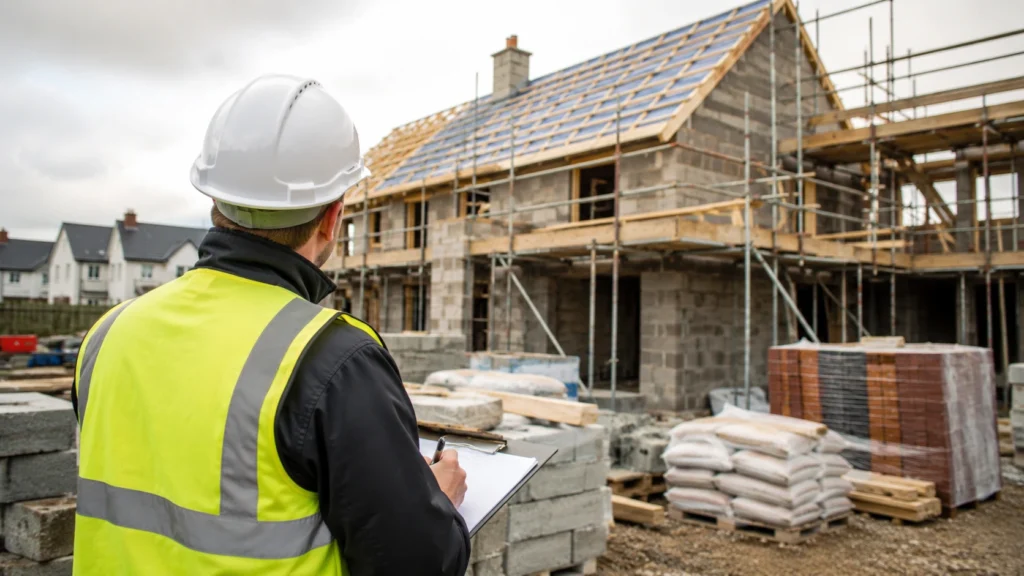
An on-site reinstatement cost assessment from a RICS Chartered Building Surveyor gives you a defensible figure that holds up at claim time, so the insurer has no basis to apply the average clause at all. The surveyor you choose matters as much as the assessment itself.
The average clause in insurance doesn’t announce itself. It sits quietly in the policy wording until the day you need the payout in full, and by then the only thing left to negotiate is how much of the shortfall you’re personally covering.
If it’s been more than a couple of years since your commercial property was last valued for insurance, that’s worth checking before it’s tested by a claim. Get an on-site reinstatement cost assessment and know the figure is right, not just hopeful.
Why is the Rebuild Cost Review important?
According to SCSI – Ireland’s leading body for property, land and construction professionals, the national annual rate of construction price inflation is now running at 14%. Lockdowns due to Covid, supply chain shocks and the war in Ukraine have seen tender price inflation rise by 22% over the past 18 months.
Rebuild Cost Assessment Follow Up
After a thorough Reinstatement Cost Assessment, to ensure that your rebuild value remains correct and up to date, we recommend following the RICS best practice guidelines which state that a desk-based Rebuild Cost Review should be completed 2 to 3 years after the full Reinstatement Cost Assessment.