

A high net worth home rebuild cost assessment exists to catch what standard calculators miss: bespoke materials, architect-led design and specialist craftsmanship that break every per-square-metre average.
Skip it and rely on the SCSI House Rebuild Calculator instead, and the figure you get will be built for a typical semi-detached estate house, applied to a property with hand-finished joinery, imported stone, and a bespoke kitchen it has no way of pricing. The number comes out low. Sometimes catastrophically low. And you will not find out until the day you need the money most.

Why the SCSI Calculator Doesn’t Work for High Value Homes
You’ve probably already been pointed toward the SCSI House Rebuild Calculator, run by the Society of Chartered Surveyors Ireland, by a broker, an insurer, or a quick search. For a conventional three or four bedroom house, it’s a genuinely useful starting point: average building costs per square metre, based on typical construction methods and standard finishes.
That’s exactly what it was built for, and for most Irish homes, it does the job reasonably well.
A high net worth property is a different exercise entirely. Once you introduce architect-led design, non-standard structural work, imported materials, or bespoke systems, a generic per-square-metre rate stops meaning anything. Two houses of identical floor area can have completely different rebuild costs depending on whether one has a stone-clad facade sourced from a specific quarry and the other has standard render. No online tool has a field for that.
Neither does market value, and neither does a rough guess at what it would cost to insure a similar-sized house down the road.
This is not a criticism of the tool. It’s a mismatch between what the tool measures and what a high value property actually requires, and closing that gap means constructing the rebuild figure from what’s actually in the property, not from an average of similar-sized homes.
What Actually Drives the Rebuild Cost on a High Net Worth Property
Four factors tend to separate a high net worth rebuild cost assessment from a standard one, and each of them can move the total sum insured significantly.
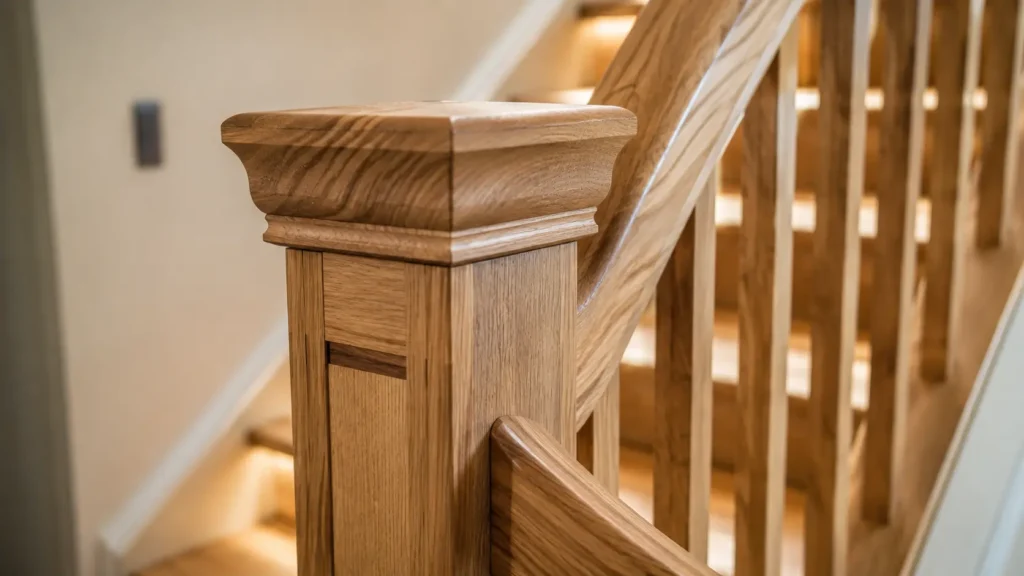
Bespoke and imported materials. Stone, timber, tiling, and joinery sourced from specific suppliers, often outside Ireland, carry costs that bear no relation to standard building materials. Reinstating a floor laid with imported marble is not the same job, or the same cost, as reinstating a floor laid with a standard tile from a local supplier. A rebuild cost assessment for a property like this has to identify exactly what was used and price a genuine replacement, not a generic substitute, because a generic substitute is exactly what you’ll be offered if a loss ever forces the point.
Architect-designed complexity. Non-standard rooflines, cantilevered structures, unusual floor-to-ceiling heights, and bespoke glazing all add cost that a per-square-metre rate cannot account for. These features tend to require specialist contractors rather than general building trades, and specialist contractors price differently. The more architecturally distinctive the house, the wider the gap between the generic estimate and the true rebuild figure, and the more of that gap lands on you personally if a claim ever tests it.
Not everything in a high value home can be reordered from a catalogue. Specialist craftsmanship and sourcing cover the parts that can’t: hand-finished joinery, custom cabinetry, decorative plasterwork. Finding a craftsperson capable of matching that original work takes time. That search alone carries a cost standard rebuild figures never factor in.
Smart home systems. A fully integrated security, climate control, and home cinema system can represent a meaningful share of a property’s total value, yet a standard rebuild figure typically allows for it as little more than a generic electrical fit-out, a fraction of what it would actually cost to replace. These systems are frequently specified, installed, and calibrated by a single supplier, and reinstating them after a loss is rarely as simple as buying an equivalent product off the shelf.
Where a high net worth property also happens to be one of Ireland’s period properties or a protected structure, these cost drivers compound rather than replace each other. If that overlap applies to your property, our Listed Building Reinstatement Cost Assessment in Ireland guide covers the heritage-specific considerations in full, including protected structure obligations under Irish planning law.

Why High Value Homes Need Agreed Value Cover
Most standard home insurance policies work on a sum insured basis. You declare a rebuild figure, the insurer accepts it, and if that figure turns out to be too low relative to the true cost of rebuilding, the average clause can reduce your payout proportionally, even on a partial claim.
On a high net worth property, that risk is magnified. The gap between a generic estimate and the true rebuild cost tends to be far wider than on a standard home, which means the potential shortfall at claim stage is also far wider.
This is why many high value policies move toward an agreed value structure instead, where the insurer agrees the rebuild figure in advance, based on a professional valuation, rather than relying on the policyholder’s own estimate.
An agreed value policy only holds up if the valuation behind it is sound. Insurers underwriting high value cover generally expect that figure to come from an independent, professionally qualified assessment rather than an online calculator or a market value estimate, precisely because those tools were never built to price a property like this.
A weak valuation undermines the entire point of moving to an agreed value policy in the first place: you end up paying an agreed value premium for a number that still leaves you short when it matters.
What a Proper High Net Worth Rebuild Cost Assessment Involves
A rebuild cost assessment for a property in this category goes well beyond floor area and house type. It requires a physical inspection that identifies the specific materials, finishes, and systems present in the property, not a generic category they might fall into.
In practice, that means pricing each element against its actual replacement cost rather than a standard allowance. Quotes come from the same or equivalent suppliers.
Tradespeople capable of matching bespoke ironmongery or decorative finishes get tracked down, and specialist labour gets priced at what those trades actually charge, not a general construction rate.
Demolition and site clearance on a large or architecturally complex property also cost more than on a standard build, and that figure needs to be calculated specifically rather than assumed.
So does professional reinstatement of any listed or protected elements, where planning constraints can add both cost and time to a rebuild that a standard assessment would never encounter.
The result should be a defensible, itemised rebuild figure that an insurer or underwriter can stand behind, not a rounded estimate. That figure won’t stay accurate forever, though.

Isn’t This Something My Broker or Insurer Already Handles?
Most brokers are genuinely good at structuring a policy around the figure they’re given. Sourcing that figure in the first place isn’t usually their job, and it isn’t their insurer’s either, which is why brokers increasingly rely on accurate reinstatement cost assessments before they finalise a client’s cover.
An insurer prices your policy against the sum insured you provide. They don’t independently verify that the number reflects what your specific property would actually cost to rebuild, and there’s little incentive for them to challenge a figure that’s too low, since a lower sum insured means a lower premium right up until the point you need to claim.
That’s the gap an independent rebuild cost assessment closes. It isn’t a substitute for your broker relationship. It’s the piece of information your broker and insurer both need to structure the policy correctly in the first place.
If the assessment itself feels like an added cost on top of an already expensive property, weigh it against the alternative. A proper assessment is a known, upfront cost you control. Underinsurance at the point of a total loss costs far more, and it arrives at the worst possible time.
How Often a High Value Property Should Be Reassessed
Construction costs never sit still. For high value homes, they move even less predictably, because bespoke materials, imported finishes, and specialist labour react to currency shifts and supply constraints in ways standard building costs don’t.
Renovations, extensions, and upgrades to smart home or security systems are common on properties in this category, and each one can move the true rebuild cost meaningfully. A valuation completed before a major renovation will not reflect the property as it stands today, no matter how accurate it was at the time.
As a general guide, a reassessment every two to three years keeps a high value policy aligned with the actual cost of rebuilding, with an update sooner than that if significant works have been carried out. Waiting until renewal to notice the gap is the expensive way to find out your cover has fallen behind.
What Happens If You’re Underinsured at Claim Stage?
In a total loss, a policy underinsured against the true rebuild cost forces the homeowner to fund the difference personally, at exactly the moment they are least able to absorb that cost. There’s no grace period for that kind of shortfall.
On a high net worth property, the size of that shortfall scales with everything that made the property expensive to build in the first place: the bespoke materials, the specialist labour, and the smart home systems priced at what they would actually cost to replace, rather than what a generic tool assumed.
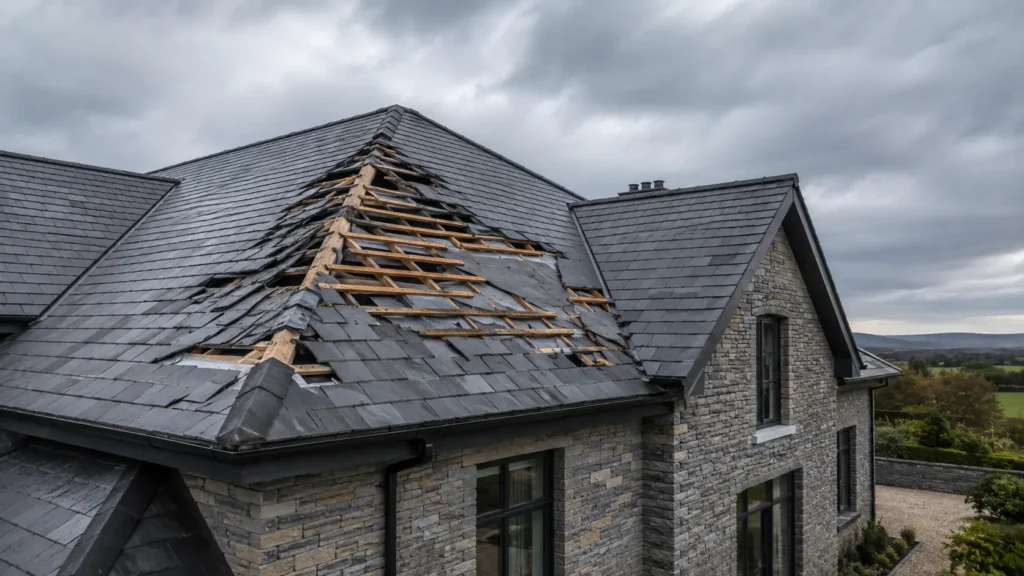
Even a partial loss carries the same exposure, since the average clause applies just as much here as it does to a total loss. A kitchen fire or a storm-damaged roof gets settled at a reduced rate if the sum insured behind the policy was too low to begin with.
This is precisely why an accurate rebuild cost assessment matters more for insurance purposes on a high value property than it does on a standard one. The margin for error is wider, and so is the cost of getting it wrong.

How to Get an Accurate Rebuild Cost Assessment
The only way to know your true rebuild cost, and to insure against it properly, is a professional assessment built around what is actually in your property, not a house insurance estimate borrowed from a standard build.
Rebuild Valuation carries out RICS-regulated on-site assessments for high net worth homes across Ireland. The result is an itemised, defensible rebuild figure that agreed value policies are built on, one that stands up if you ever need to make an insurance claim. Get my rebuild cost assessed and find out what your property would genuinely cost to rebuild, not what a calculator assumes it might.