
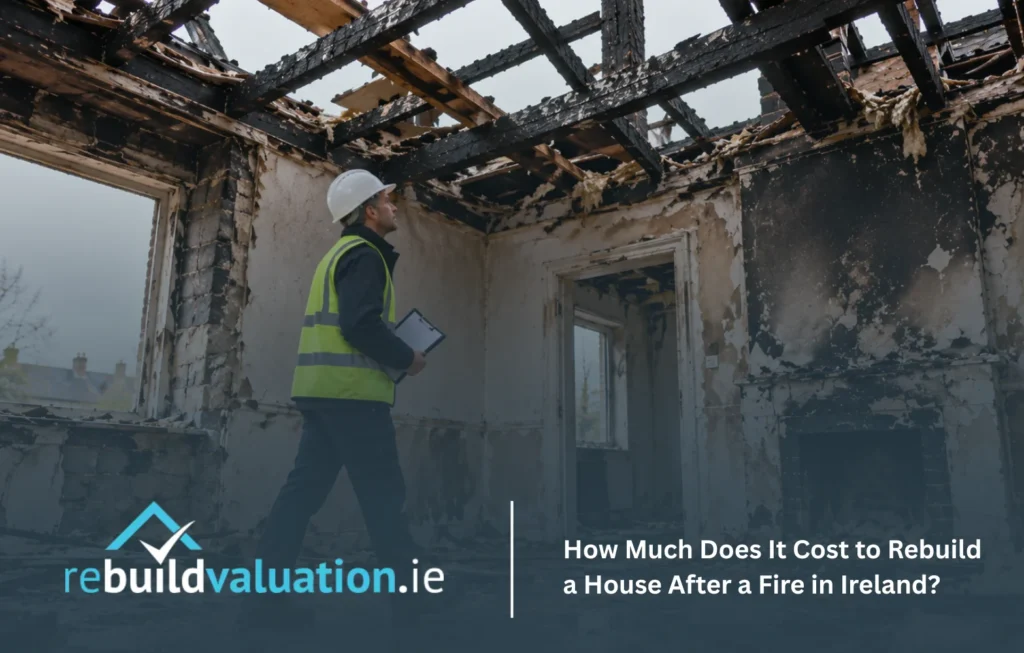
The cost to rebuild a house after a fire in Ireland runs from €270,090 in the North West to €331,340 in Dublin for a standard three-bed semi.
But that’s a floor, not a forecast, and it only applies to one type of home. If the sum on your policy sits below your real rebuild cost, you could end up funding part of the rebuild yourself.
Fire brigades attended 4,131 fires in people’s homes in 2025, according to the National Directorate for Fire and Emergency Management. Whether yours is ever one of them, check the sum on your policy before you need it.
Cost to Rebuild a House After a Fire, by Region
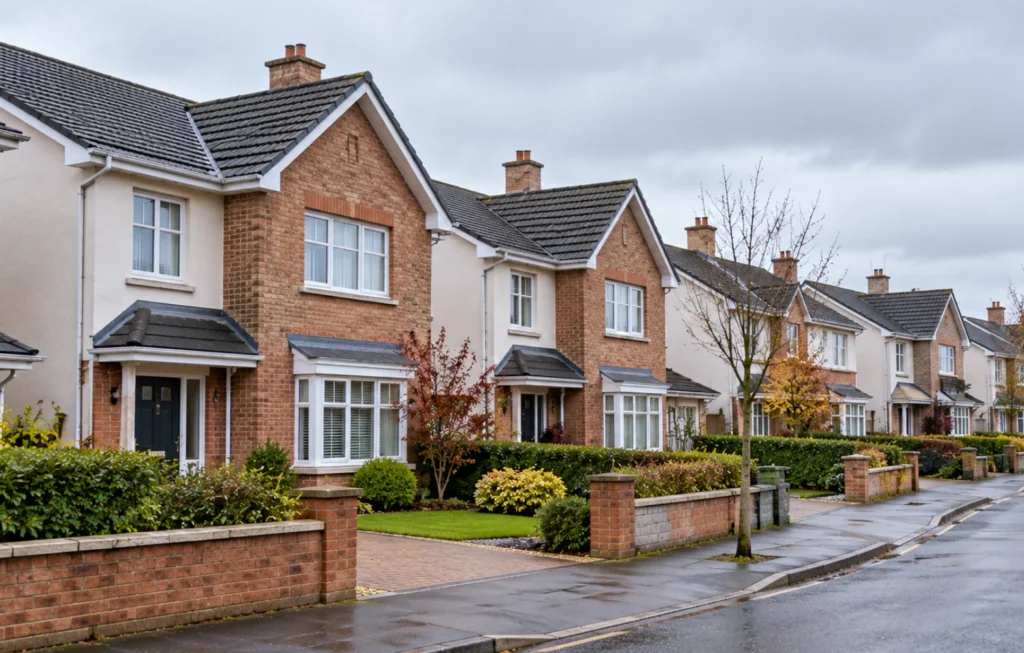
The Society of Chartered Surveyors Ireland publishes the benchmark most homeowners start with. Its 2025/26 House Rebuilding Guide, published on 4 November 2025, prices a three-bed semi of 98 square metres as follows.
| Region | Minimum rebuild cost | Approx. per sq m |
| Dublin | €331,340 | €3,381 |
| North East | €293,220 | €2,992 |
| Waterford | €290,960 | €2,969 |
| Cork | €288,710 | €2,946 |
| Galway | €288,410 | €2,943 |
| Limerick | €286,550 | €2,924 |
| North West | €270,090 | €2,756 |
The gap between Dublin, the most expensive region, and the North West, the least, is €61,250. Where you live alone can move the bill by tens of thousands.
These are total-loss figures. They assume the house is destroyed, demolished and rebuilt to current building regulations, including modern insulation, air-tightness and heating standards. An older house is priced as the house you would have to build today.
They include demolition, professional fees for the surveyor, architect, engineer and quantity surveyor, and VAT at 13.5% on building costs and 23% on professional fees.
The SCSI describes these rates as the minimum you should insure the structure for. Keep that word in mind. Your own house may cost more.
How Is Partial Fire Damage Priced?
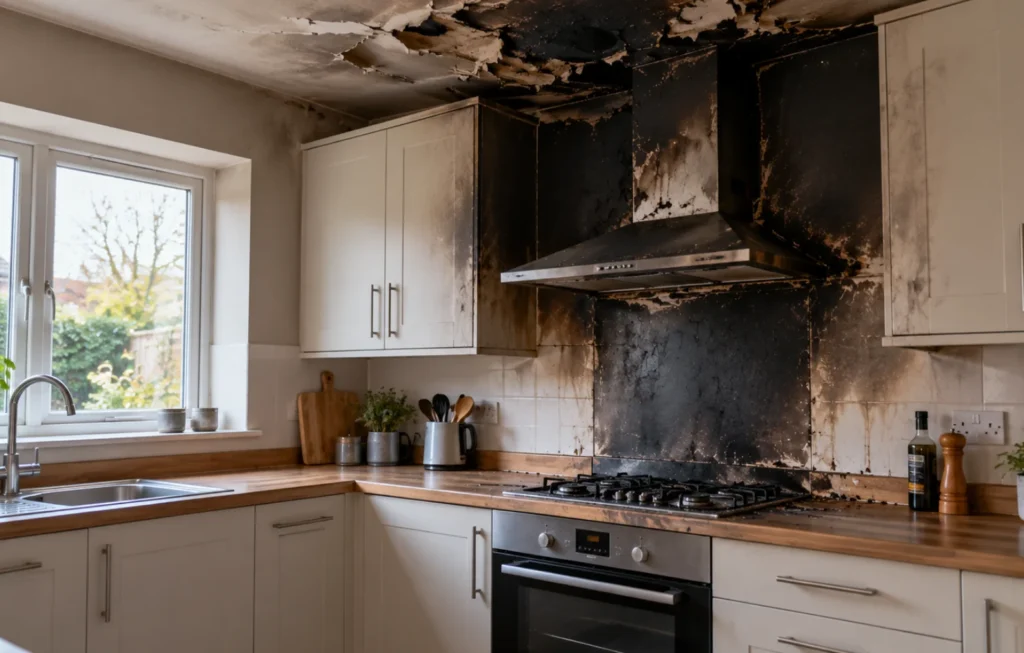
Not every fire ends in a demolition. If the damage is confined to a kitchen or an attic, no rate per square metre applies. A repair is priced from a scope of works: what burned, how far the smoke and soot travelled, and what the water used to put the fire out has soaked.
Two fires of similar size can produce very different bills, which is why damage is assessed on the property itself rather than read from a table.
Partial damage costs less than a full rebuild, but your claim may not be measured that way. Homeowners are most exposed on that point, and the underinsurance section below explains why.
What Drives Up Fire Rebuild Costs?
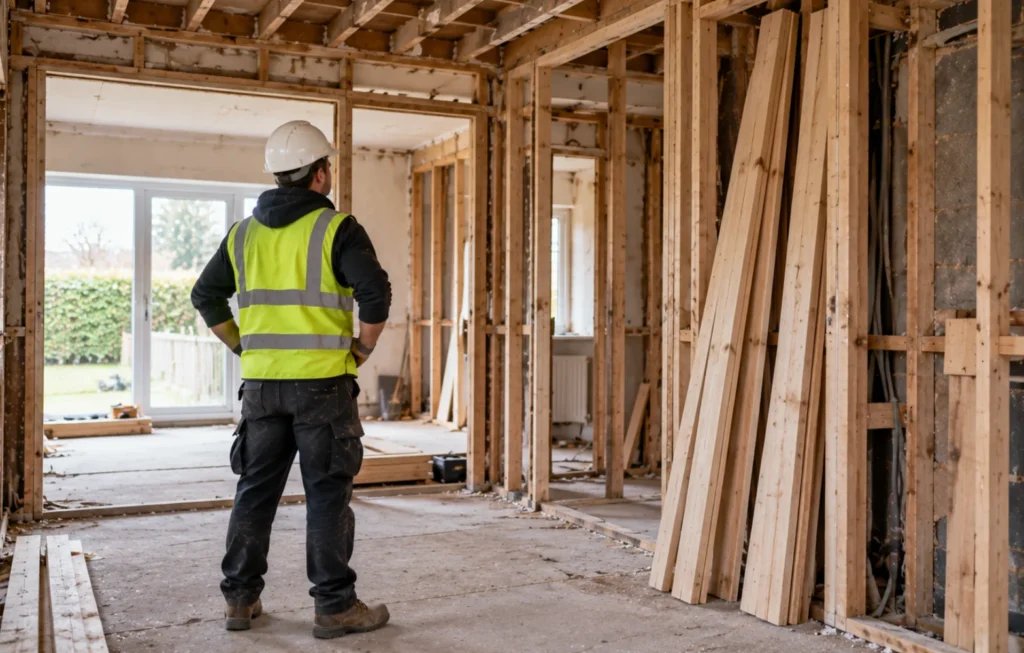
Your fire damage rebuild cost probably includes things the SCSI’s standard specification doesn’t. These are the usual gaps:
- A bespoke fitted kitchen, built-in wardrobes, hardwood floors or a high-specification bathroom
- High boundary walls and special fixtures
- Sheds and other outbuildings
- A separate garage, which is an add-on in the calculator
The figures do cover a concrete path, a driveway, re-grassing and fencing. Anything beyond that is yours to estimate and add, and anything you leave out can become part of the shortfall.
Labour sits underneath all of it. The SCSI says rebuild costs have been rising faster than construction costs generally. Rebuilding is heavily affected by labour costs and availability, and those pressures continue to drive the increases.
Fire rebuilds add their own twist. When the 2025/26 guide came out, the SCSI’s president told RTÉ that this work typically goes to builders who do one-off builds, small extensions and refurbishments, and that it is very labour intensive, which generally means much higher costs.
Demolition comes first. The damaged structure has to come down and the site has to be cleared before anything goes back up, and the SCSI figures include that work.
In the same interview, the SCSI’s president pointed to waste levies on demolition as a cost pressure.
Professional fees are built in too. The SCSI allows for a chartered building surveyor, architect or engineer to prepare drawings and specifications and administer the building contract, a quantity surveyor to invite tenders, process payments and agree the final account, and an engineer for structural advice.
It also allows for the fees to certify the finished house.
Contents are a separate matter. Nothing in the SCSI figure covers carpets, curtains, furniture, appliances, electronics or jewellery.
Those sit under contents insurance, a separate policy from your buildings insurance, and they need their own sum insured.
The rebuild isn’t the only bill after a fire. Many policies pay fire brigade charges and the cost of alternative accommodation, but usually only up to a limit, and neither is part of the SCSI rebuild figure.
Check both limits in your policy wording.
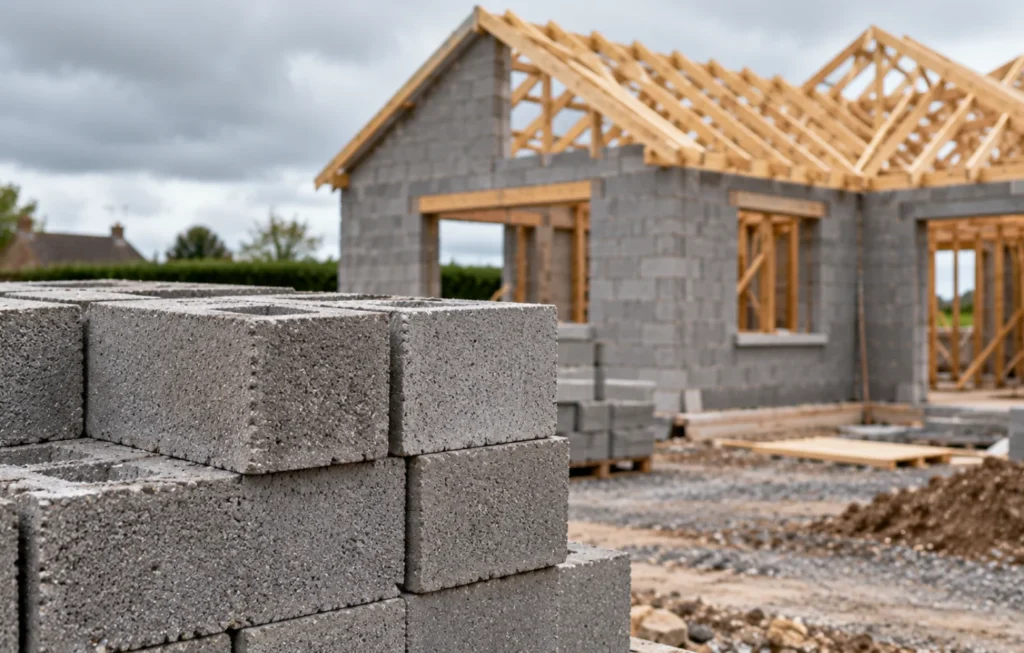
How Fast Do House Rebuild Costs Rise in Ireland?
A correct sum insured still goes stale. The SCSI’s last three guides recorded national average increases of 12%, 6.2% and 7%. A sum insured set three years ago has missed all three of those rises.
In the latest guide, regional increases ranged from 3% in Cork and 5% in Dublin to 9% in the North West. Galway and Limerick rose 7%, and Waterford and the North East 8%.
Some insurers may adjust the sum insured automatically each year, but not all do. If yours hasn’t been updated, the policy stays where you left it while the cost of rebuilding moves, and the gap can stay hidden until you make a claim.
Insurers commonly recommend reviewing your sum insured at each renewal, and the SCSI advises reassessing it after changes such as a home office extension or garden office. Each change alters what it would cost to rebuild your house, so tell your insurer about changes to your home.
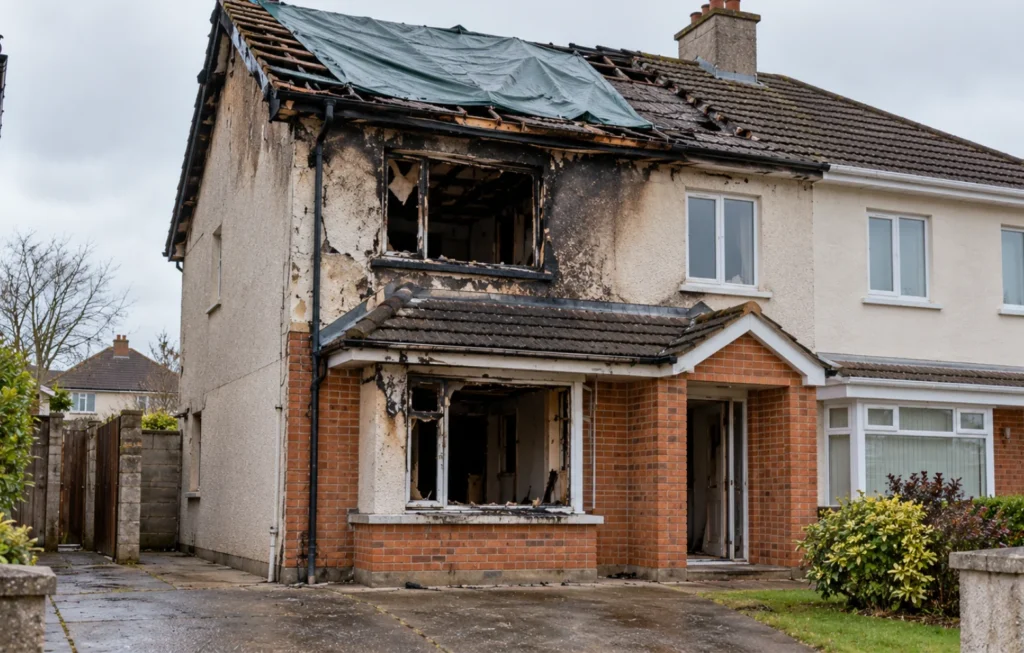
What Happens If Your House Is Underinsured After a Fire?
Many home insurance policies include an average clause. If your sum insured is lower than the true reinstatement cost, the insurer may reduce any claim by the same proportion, even for partial damage.
Our guide to the risks of underinsurance explains how this works in detail.
The SCSI gives two examples that make it concrete. Insure at 75% of the true cost and a €60,000 repair may leave you with €45,000 from the insurer and €15,000 to find yourself.
On a total loss, a house that costs €360,000 to rebuild but is insured for €270,000 leaves you €90,000 short.
On a larger house fire insurance claim, an insurer may appoint a loss adjuster to assess the loss, and your sum insured may be tested against the true rebuild cost as part of that process.
Some policyholders bring in a loss assessor to act on their side.
Insuring far above the rebuild cost isn’t the answer either. Claims are generally measured against the actual cost of rebuilding.
An inflated sum may raise your premium without increasing what the insurer will pay. The detail depends on your policy terms, so check your wording or ask your broker.
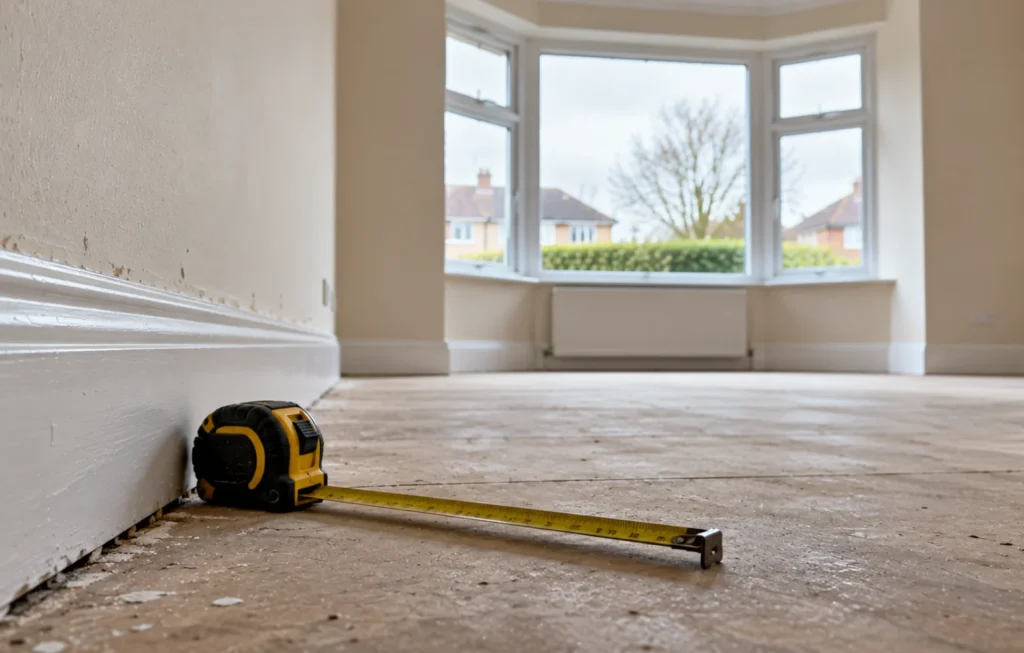
How Do You Calculate Your Home’s Rebuild Cost?
If your house is a standard estate home, start with the SCSI’s free rebuild calculator. It takes four steps.
- Measure the gross internal floor area at each floor level, to the internal finish of the walls and ignoring skirting boards. In a two-storey house the upper floor is normally the same as the ground floor. If it isn’t, measure each storey separately and add them together.
- Pick your house type and region. If you sit between two regions, the SCSI suggests taking the higher.
- Add the cost of a separate garage, if you have one.
- Add any higher-than-average fit-out and any outbuildings.
The sum is your floor area multiplied by the regional rate, plus any extras. For a 98 sq m semi in Dublin, 98 sq m at €3,381 per sq m comes to about €331,340.
In the North West, at €2,756 per sq m, it comes to about €270,090. A garage, a fit-out upgrade or a shed goes on top.
Leave market value out of the sum. A market valuation is what a buyer would pay for your property on the open market. A rebuild cost is what it takes to replace the building, and the SCSI says the two can be very different.
For where online tools fall short, see our guide to what a rebuild cost calculator can and cannot tell you.
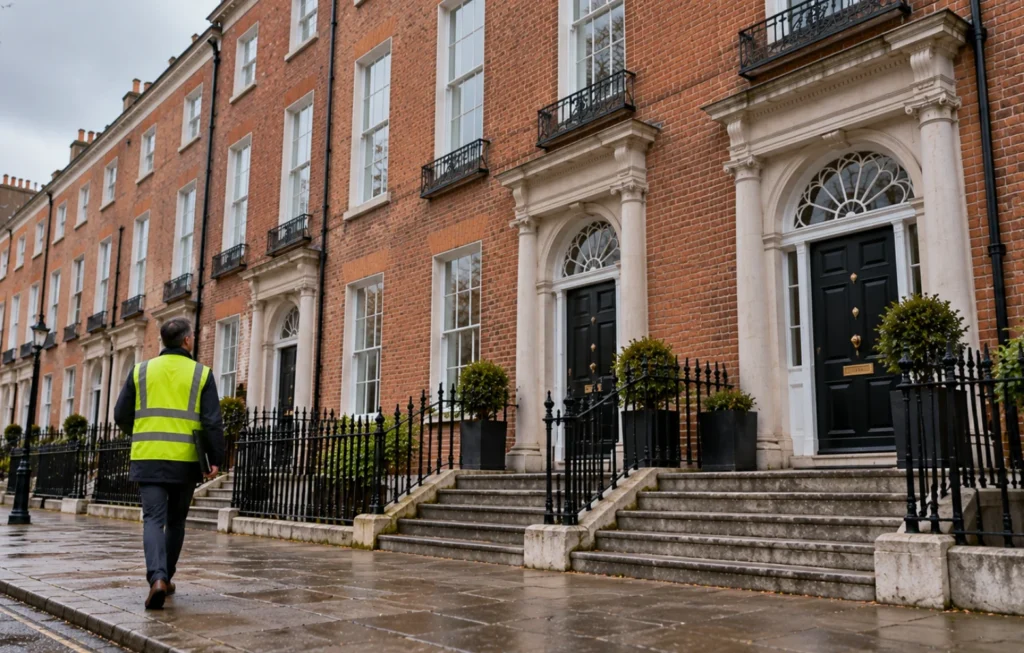
Which Homes Does the SCSI Calculator Not Cover?
If you live in a Georgian terrace, an apartment or a one-off house in the countryside, the SCSI calculator wasn’t built for you. It covers estate-type houses built in Ireland since the 1960s, and it doesn’t cover homes with more than three storeys or a basement, bespoke properties, period houses such as Victorian and Georgian homes, or apartments.
Its guidance points one-off countryside homes and period houses to a chartered surveyor. For apartments, the route is your management company or agent, who arrange block insurance.
Put a Georgian terrace through it and you get a tidy number that has nothing to do with the plaster, joinery and stonework you would actually be rebuilding.
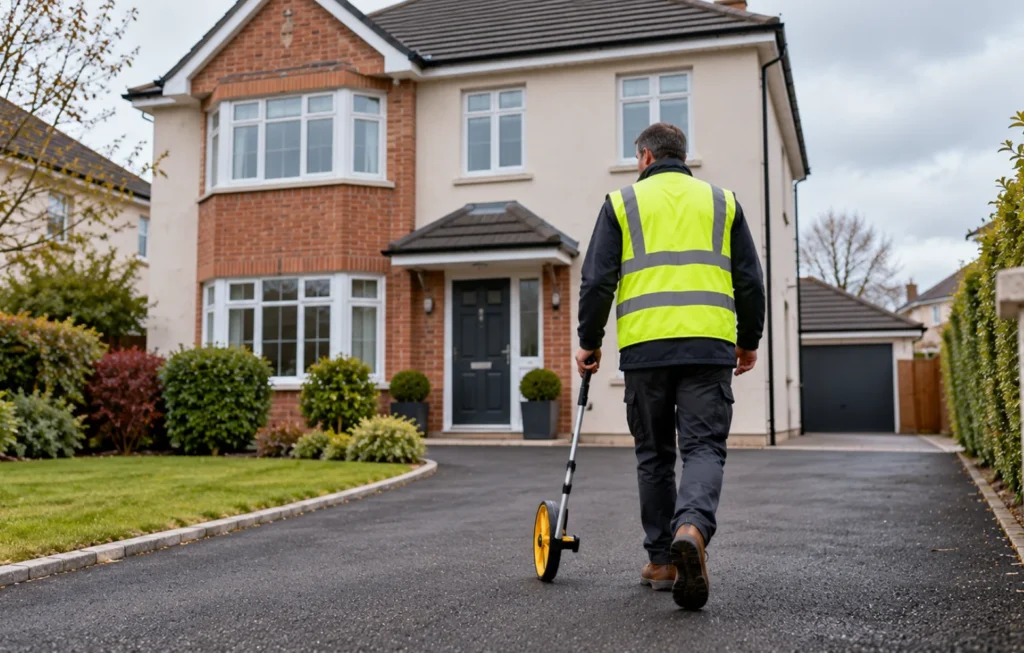
We carry out this work. A chartered building surveyor visits, measures and records what is built and how, then prepares a written report with the reinstatement cost. We are a RICS-regulated firm that specialises in reinstatement cost assessment in Ireland, and you can see how our rebuild cost assessment services work in full.
Your broker can place the cover. The figure it rests on still has to come from somewhere.
Frequently Asked Questions
Is the SCSI rebuild figure enough to insure my house?
It’s the minimum the SCSI recommends for a standard estate-type home, so treat it as your starting point. Add the cost of anything your house has above the standard specification, and get a surveyor’s figure if your home is not a standard estate house.
Does the rebuild cost include my belongings?
No. The rebuild cost covers the building. Your belongings are covered by contents insurance, which needs its own sum.
How often should I update my sum insured?
Insurers commonly recommend reviewing it at each renewal, and again after any extension or renovation.
Get a Rebuild Cost Assessment in Ireland
Nobody budgets for a fire. The number that decides how one ends is set months or years earlier, usually in a few minutes. Then forgotten. Check yours before your next renewal.
If your home sits outside the SCSI calculator, or you want a number you can rely on, we carry out on-site assessments nationwide.
Book my on-site rebuild cost assessment in Ireland through the enquiry form or by calling the office, and you’ll receive a written report with a figure you have checked, not one you have assumed. We confirm what the assessment involves before you commit to anything.
This article is general information about rebuild costs. It is not insurance, financial or legal advice, and it does not take account of your policy terms. RebuildValuation is a firm regulated by RICS (reg. no. 860896). Please read our disclaimer.