
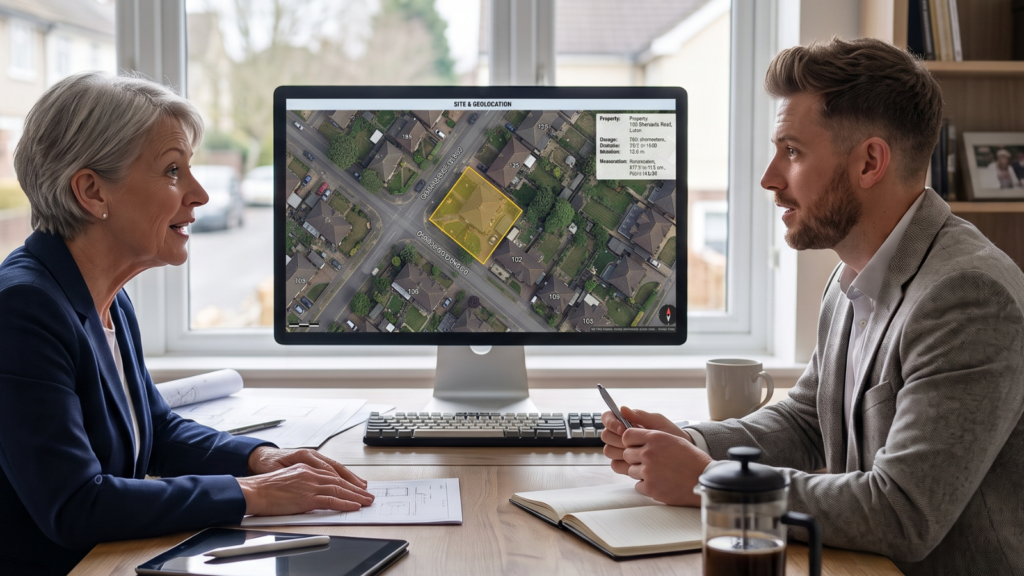
A desktop rebuild cost assessment is a professional valuation of what it would cost to rebuild your property, produced remotely by a Chartered Surveyor-led team using planning records, mapping data and professional cost analysis instead of a site visit. Here’s what most guides skip: choose the wrong property for this route, and it can hand you a figure your insurer accepts today and disputes the moment a claim is made.
That gap between what gets signed off and what actually holds up quietly builds into underinsurance. It rarely shows up until the worst possible moment, when a claim is being assessed and the sum insured falls short. For commercial property owners, brokers and managing agents, knowing when a remote assessment gets you there, and when it doesn’t, is the difference between a formality and real protection.
What Is a Desktop Rebuild Cost Assessment?
A desktop rebuild cost assessment puts a figure on what it would cost to rebuild your property, using existing planning and mapping records rather than a physical inspection, with an RICS Chartered Surveyor producing the final figure.
They draw on gross external area, construction type and building materials to produce the figure, cross-checked against planning and mapping records rather than confirmed on site. It sits closer to a real estate appraisal than a physical survey in that respect: informed judgement applied to existing data.
The output looks the same as a full on-site report. A rebuild cost, broken down by element, that your insurer can use to set the correct sum insured for insurance purposes. The difference is entirely in how that figure was produced. There’s no physical inspection, no walk-through, no chance to see what’s actually behind the façade. The result depends entirely on the accuracy of the information available and the experience of the surveyor interpreting it.
For the right property, this is simply a faster way to reach a reliable rebuild cost assessment, without the fee or lead time of a site visit. The question that actually matters is which properties qualify as right.
What’s the Difference Between a Desktop and On-Site Assessment?
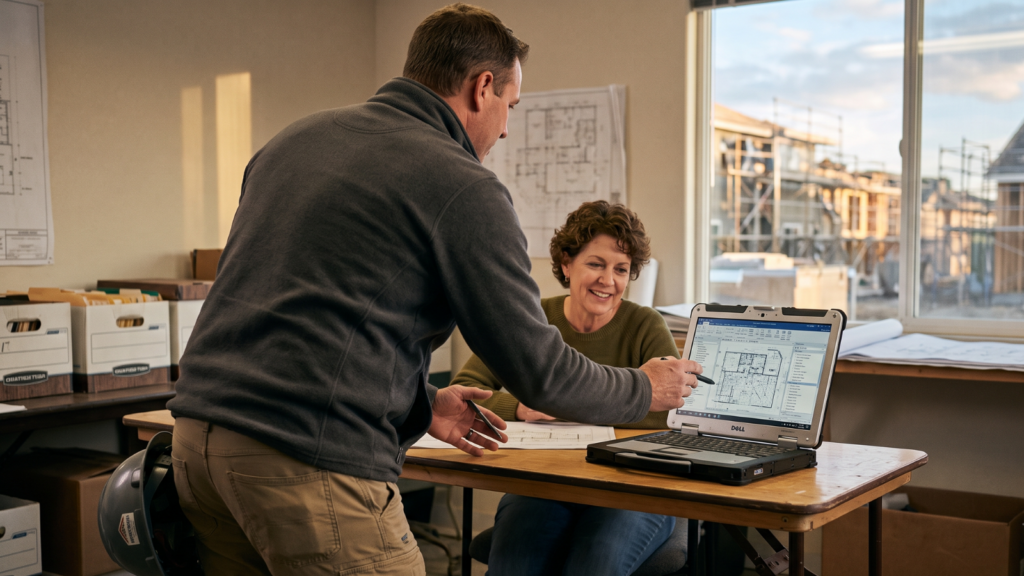
An on-site assessment means a Chartered Surveyor physically inspects the property: measuring, photographing and noting construction quality, condition and any features that affect cost. A site visit catches things no remote process can: non-standard finishes, structural alterations, a hidden plant room, or a mezzanine level that never made it onto the original planning drawings.
The desktop route skips that step entirely. It works from what’s on record, not necessarily what’s actually there today. For a modern, single-use commercial building of standard construction, the gap between the two is usually small. For anything altered, extended, or built before digital planning records existed, that gap can be large enough to under-value the rebuild cost without anyone noticing until it matters.
Every desktop assessment carries this trade-off, whether you’ve named it or not: faster and cheaper against someone actually seeing the building for themselves. Which side makes sense depends entirely on the property.

When Does a Desktop Assessment Work for Your Property?
Standard properties, ones where the footprint, construction type and materials can be confirmed reliably from existing records, are reasonable candidates. A conventional retail unit, a modern office suite, or a steel-frame warehouse with no unusual additions will typically fit. If the building matches its planning drawings and hasn’t been altered since, the process moves quickly, usually within days rather than weeks.
Smaller structures attached to the main building, a garage, a storage outbuilding, a loading canopy, can usually be factored in from records too, provided they’re clearly documented and don’t introduce construction types the process wasn’t built to handle.
In short, the property that suits a remote assessment is the property with nothing to hide. Nothing bespoke, nothing undocumented, nothing that requires someone to see it in order to believe it.
When Do You Need a Full On-Site Assessment Instead?
Some properties simply aren’t candidates for this route, whatever the fee difference. Listed or protected buildings, properties built with unusual or heritage materials, and buildings with complex internal layouts, mezzanines, hidden extensions, or mixed residential and commercial use under one roof, all need a surveyor on site to produce a figure that will hold up.
High-value properties carry the same logic. The larger the potential gap between an estimated rebuild cost and the real one, the smaller the acceptable margin for error, and the more a physical inspection earns its cost. If your building has been extended, converted or altered since it was built, and those changes aren’t clearly reflected in current planning records, a site survey is the only way to be confident the figure is right.

Why the Data Behind Your Rebuild Cost Assessment Matters
Not every rebuild cost assessment is built on the same foundation. Its accuracy depends entirely on the quality of the information feeding it: accurate mapping, current planning records, and construction cost data that reflects today’s material and labour rates rather than figures from two or three years ago.
Generic online calculators fall short here too. Tools such as the SCSI’s house rebuilding calculator are built for standard residential homes and explicitly exclude commercial buildings and non-standard construction. A commercial rebuild cost assessment needs a Chartered Surveyor applying professional judgement to the specific building in front of them, rather than a per-square-metre figure pulled from a residential model. Skip that judgement on a complex building and you’re not looking at a rebuild cost. You’re looking at a guess with a number attached.
Getting Your Sum Insured Right
Get your sum insured wrong on the low side, and most commercial policies apply the Average Clause: if the declared figure is found to be below the true rebuild cost at the time of a claim, your insurer can reduce the payout proportionally, even where the rest of the claim is entirely valid. An inaccurate rebuild cost assessment doesn’t cost you a slightly wrong number on a form. It costs you a smaller cheque when you need the full amount.
This is why insurance brokers increasingly ask for a professional assessment rather than relying on a client’s own estimate or a figure carried over from a previous policy. An accurate assessment protects the property owner from being underinsured, and protects the broker placing the cover.

Why Rebuild Costs Still Rise as Construction Inflation Cools
The SCSI’s Tender Price Index for February 2026 shows commercial construction costs rose 2.5% nationally across 2025, the lowest annual increase since 2020, after a further 1% rise in the second half of the year alone. That’s a sharp slowdown from the double-digit spikes of 2022, when rising inflation first put Irish sum insured figures at risk. It’s also exactly the kind of number that tempts people to stop paying attention.
The regional detail makes the case for a proper assessment even sharper. Connacht and Ulster saw annual construction inflation of 3.8% in 2025, Munster 3.5%, Dublin 1%, and Leinster outside Dublin just 0.5%. A single national average hides which properties are ageing out of their sum insured fastest, and a rough percentage applied to an old rebuild cost figure is not the same as a proper reassessment.
Trevor Kelly has made a version of this point publicly. In comments to The Irish Times, he warned that businesses, not just homeowners, are leaving themselves exposed to significant financial loss by failing to update their cover as rebuild costs move. A slower headline inflation rate doesn’t undo a gap that’s already built up over the past few years. It just gives property owners less reason to notice it’s still there.
How Often Should You Get a Rebuild Cost Assessment?
A full on-site reinstatement cost assessment every three to five years, with a desktop review in the interim, is the standard most commercial property owners should work to. The mistake isn’t choosing the wrong type of assessment. It’s treating any single one as a figure you never need to revisit.
The interim desktop review doesn’t replace the full assessment. It keeps the figure honest between full assessments, catching the effect of construction inflation before it turns into a gap between what you’re insured for and what it would actually cost to rebuild.
For an owner managing a single commercial building, that discipline is sensible. For anyone managing a portfolio, it’s close to essential. A remote review can be run across multiple properties far more efficiently than a full site visit to each one, keeping every sum insured broadly current until the next full assessment falls due.
If you’re weighing up whether your property qualifies for the desktop route or needs a surveyor on site, that’s a five-minute conversation, not a guessing game. Send over the basics of the building and you’ll know which route actually protects you.
Common Questions About Desktop Rebuild Cost Assessments
How long does a desktop rebuild cost assessment take?
Usually days, not weeks. Provided the property matches its planning records and hasn’t been substantially altered, there’s no site visit to schedule and no waiting on a surveyor’s diary.
Can a desktop assessment be used for commercial property in Ireland?
Yes, for standard construction. Retail units, modern offices and conventional warehouses are the properties most likely to qualify. Anything listed, altered, or built with unusual materials needs a surveyor on site instead.
Is a desktop assessment as accurate as a full on-site survey?
For the right property, close enough to make no practical difference. For anything altered, extended, or genuinely complex, no.
How often should a commercial property get a rebuild cost assessment?
Every three to five years for a full on-site assessment, with a desktop review in between to keep the figure honest against construction inflation.