
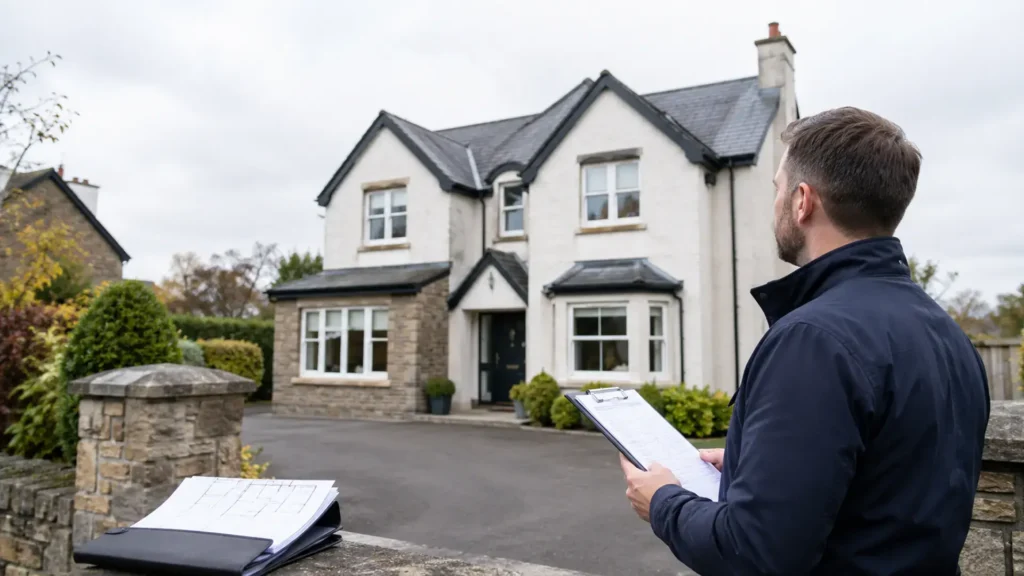
Three years is the key RICS review point , but it should not be treated as a reason to leave your sum insured untouched in the meantime. RICS guidance advises an annual adjustment to reflect inflationary effects, with a major review and reassessment every three years, or sooner where significant alterations have been made to the insured property.
That distinction matters. Your sum insured needs to keep pace with what it would actually cost to rebuild today. Given that Irish construction costs rose by an average of 6.2% in the past year, an RCA completed three years ago may already be materially behind current reinstatement costs.

What Does the RICS Guidance Actually Say?
If your commercial property has a current assessment, completed within the last three years, you’re working from the standard most Irish insurers and brokers recognise. The Royal Institution of Chartered Surveyors recommends a full assessment at least every three years, or sooner where there’s been a material change to the property.
Both RICS and the Society of Chartered Surveyors Ireland align on this. RICS describes this formally as a two-tier model: an annual adjustment to reflect inflationary effects on the declared value, and a full major review every three years, as set out in the RICS professional standard, most recently updated in June 2024. The three-year cycle isn’t a legal requirement, but it carries real contractual weight. Some policy wordings may include Average Clause waiver provisions where a suitable professional reinstatement cost assessment has been completed within a specified period. The availability and operation of any waiver depend entirely on the insurer, the policy wording and the conditions attached. Miss it, and that protection may not apply when a claim is made.
For straightforward commercial properties, every three years is the correct minimum. For complex or high-value assets, including listed buildings, mixed-use properties, or those with specialist fit-out, the interval should be shorter.
Is a Three-Year Reinstatement Cost Assessment Cycle Enough?
Three years was a reasonable benchmark when construction cost inflation in Ireland was stable. It’s not stable right now.
The SCSI reported a 6.2% average increase in house rebuilding costs nationally over the most recent twelve-month period. The rebuild cost of a standard three-bed semi-detached ranges from around €247,744 in the North-West to €312,620 in Dublin. Those figures apply to estate-type residential properties only.
For commercial buildings, which carry the additional costs of demolition, site clearance, compliance with current building regulations, and reinstating specialist fit-out, a 6% annual drift means a figure from three years ago could easily be 15% to 20% short of what it would actually cost to rebuild the property today.
And unlike residential properties, where the SCSI calculator provides a useful public benchmark, there’s no equivalent tool for commercial assets, so the gap stays hidden until a claim forces it into the open.
Building costs don’t move in line with the Consumer Price Index. The distinction matters: CPI tracks food, mortgages and energy costs. Rebuild cost inflation tracks building materials, contractor margins, labour availability and site-specific factors. These are a completely different set of inputs, moving at a different rate.
Materials pricing, labour costs, supply chain pressures, and local contractor availability can all shift significantly without triggering the headline inflation figures that prompt most property owners to act. The gap closes quietly, and it only becomes visible when a claim is made.
For Irish commercial property owners, the three-year cycle sets the outer boundary. It’s not the comfortable midpoint.
That distinction matters most in the situations that sit outside the standard cycle.

When Do You Need a New Reinstatement Cost Assessment?
The calendar isn’t the only trigger. Certain events make a new RCA necessary regardless of when the last one was done, and if any of the following apply to your property, the existing figure shouldn’t be relied upon for insurance purposes.
Renovation and refurbishment are the most common triggers. Any material change to the structure, footprint or specification alters the accurate rebuild cost, whether that means adding a mezzanine level, upgrading mechanical and electrical systems, or improving the external envelope. Same building. Different cost to rebuild.
Change of use is equally significant, and often overlooked. A warehouse converted to offices carries a different reinstatement cost to its previous condition. The fit-out standard, fire suppression requirements, and M&E complexity are all different. The footprint can be identical. The exposure is not.
If you’re approaching a mortgage refinancing, a sale or a lease renewal, lenders and acquirers routinely require a current assessment as part of due diligence. An outdated report causes delays at exactly the point where they’re most costly. Worth resolving in advance, not under time pressure.
Regulatory changes matter independently of any site-level work. Updates to building regulations, fire safety standards, or energy efficiency requirements can increase the cost of reinstatement even where the building itself hasn’t changed at all.
One practical rule: if construction costs in your region have risen more than 10% since your last assessment, commission a desktop review. Don’t wait for the three-year date.
Reassessment Checklist: Is Your Current Figure Still Valid?
Before your next insurance renewal, run through these six questions. If the answer to any of them is yes, your current reinstatement figure needs to be revisited.
1. Has it been more than three years since your last on-site assessment? This is the RICS threshold for a full major review. If you’re past it, you’re outside the window most insurers use to assess Average Clause waiver eligibility.
2. Have you carried out any extensions, renovations or fit-out works? Any change to the structure, specification or floor area changes the rebuild cost. This includes internal reconfigurations, roof replacements, and upgraded M&E systems.
3. Has the building changed use, or has a new tenant moved in with different requirements? A change in occupancy type carries different reinstatement requirements, fire safety standards and fit-out costs. A warehouse to office conversion is the most common example, but the same applies to any shift in use.
4. Are you approaching a refinancing, sale or lease renewal? Lenders and solicitors typically require a current assessment report as part of due diligence. An outdated report delays the process at exactly the point where delays are most costly.
5. Has your index-linking kept pace with Irish construction cost inflation? Index-linking adjusts your declared value annually, but it applies a generic multiplier to an existing figure. If that figure was already understated, the adjustment compounds the error. The SCSI reported a 6.2% national increase in the past year. Check whether your policy index reflects Irish construction costs specifically, or just general inflation.
6. Do you know whether your policy includes an Average Clause waiver condition? Some Irish insurers waive the Average Clause where a RICS-regulated assessment has been completed within the previous three years. If you don’t know whether your policy includes this condition, or when your last assessment was, that’s the first question to put to your broker.
How the Average Clause Can Reduce Your Claim
Most property owners know that claim payouts can be reduced if coverage is insufficient. Fewer understand exactly how the mechanism works.
The Average Clause allows an insurer to reduce a settlement proportionally if a property is found to be underinsured at the time of a loss. If your rebuild valuation is set at 70% of the true reinstatement cost and you make a claim, you may receive only 70% of the expected settlement. That applies to every claim, partial or total. The shortfall is yours to fund. If you want to understand the full financial exposure, our guide to the risks of underinsurance covers the consequences in detail.
Here is the timing connection most people miss entirely: some insurers will waive the Average Clause where the policyholder can show that a full assessment was carried out by a regulated professional within the previous three years. If the report is four years old, that waiver may no longer apply. A stale RCA doesn’t just mean inaccurate coverage. It can mean the contractual protection you believed was in place has quietly lapsed.
Worth asking your broker whether your policy includes a waiver condition, and when your last assessment was.
The precise terms vary by insurer and policy wording. What’s consistent is that a current, accurate reinstatement valuation gives your broker the strongest possible position when negotiating your coverage terms.
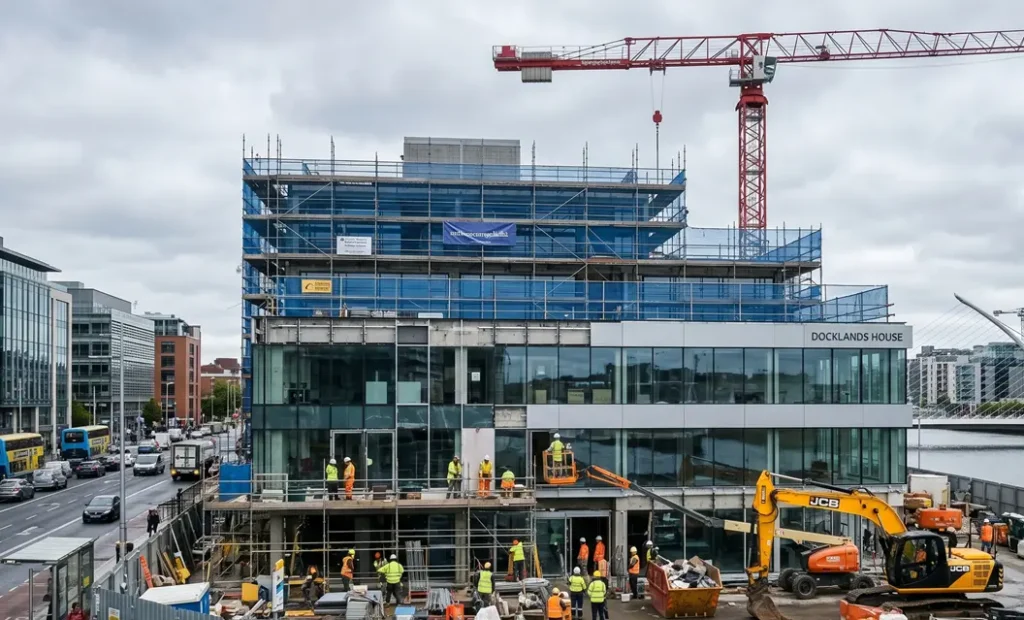
How Often Should You Review Your Reinstatement Figure?
You may be wondering how this fits with your broker’s role. A good broker will often prompt a review of sums insured, especially at renewal, but the reinstatement figure itself still needs to be supported by an accurate and up-to-date assessment. When that figure is current, it helps the broker place the risk properly, gives the property owner clearer protection, and reduces the chance of difficult conversations if a claim arises.
A full on-site RCA, carried out by a RICS Registered Valuer and chartered surveyor, is generally the most robust basis for setting a declared value, because it can account for the actual specification of the building, site-specific constraints, professional fees and current reinstatement assumptions. An index-linked adjustment applies a generic multiplier to an existing figure. If the base figure was already drifting, the adjustment compounds the error rather than correcting it.
In practice, the properties where we see the biggest gaps are ones that were assessed accurately at the time of a refinancing or acquisition, then left untouched for five or six years while the building changed around them. By the time a claim arises, the declared figure can be 25% to 30% below current reinstatement cost. That gap is entirely avoidable.
Between full assessments, a desktop review is the practical answer for keeping your insurance coverage current. It draws on current market data and your last on-site records to produce an updated rebuild cost figure without a return site visit. Faster. Lower cost. And accurate enough to track the intervals between full assessments.
Treat the two as a cycle. A full on-site assessment every three establishes the accurate baseline. Annual desktop reviews mean you’re never more than twelve months from a figure you can rely on. For property owners managing multiple assets, or for brokers handling a commercial portfolio, this removes the risk of coverage silently eroding between valuation cycles.
What Insurance Brokers Need to Know About Reinstatement Valuations
For brokers with commercial property clients, the reinstatement valuation is one of the most direct tools available for managing underinsurance risk across a book.
If a client suffers a significant loss and the declared value has not kept pace with current reinstatement costs, the Average Clause may become a difficult issue at exactly the wrong time. A current RCA helps the broker evidence that the client has been advised to review the adequacy of cover, while also giving the client a stronger basis for setting an appropriate sum insured.
Clients who understand the consequence of an outdated figure tend to act on the recommendation. The explanation is usually the barrier, not the willingness to proceed.
Is a Professional Assessment Worth the Cost?
It’s a fair question. A professional on-site RCA isn’t free, and smaller commercial property owners in particular may weigh whether it’s necessary for their situation.
The Average Clause doesn’t distinguish by property size. A 50% shortfall in the declared value on a modest industrial unit produces exactly the same proportional reduction in a claim settlement as it does on a large office building. The scale differs. The mechanism does not.
One assessment, one cost, paid once. A 20% shortfall on a significant claim is not recoverable. For most commercial property owners, the calculation isn’t close.
Assessment fees vary depending on property type, size, and complexity. To get an indication of cost for your specific property, get in touch directly.
Frequently Asked Questions
How often should a reinstatement cost assessment be done?
RICS recommends a full on-site assessment at least every three years, with an annual desk-based adjustment to account for inflationary effects on the coverage figure. In practice, any material change to the property requires a new assessment regardless of when the last one was carried out. This includes extensions, change of use, and significant refurbishment.
What is included in a reinstatement cost assessment?
A full assessment covers the total cost to rebuild the property from the ground up: site clearance and debris removal, compliance with current regulatory requirements, surveyor and architect costs, and any site-specific factors such as access constraints or listed building requirements. The output is a declared value for insurance purposes. It’s not a market value figure.
What happens if my reinstatement cost assessment is out of date?
Your property may be carrying less cover than its true rebuild cost, without you knowing it. In the event of a claim, your insurer can apply the Average Clause, reducing your settlement proportionally to the degree of underinsurance. A figure that’s 20% below current reinstatement cost means a 20% reduction on every claim you make, partial or total. The shortfall is yours to fund.
Do I need a RICS surveyor for a reinstatement cost assessment in Ireland?
For commercial properties and non-standard residential properties, it is strongly advisable to use a suitably qualified and regulated chartered surveyor. Many insurers, brokers, lenders and professional advisers place greater reliance on assessments carried out by appropriately qualified professionals. For straightforward estate-type homes, the SCSI provides a free online rebuild cost calculator, but that tool doesn’t apply to commercial buildings, period properties, or any property with non-standard construction or specialist fit-out.
What is a day one reinstatement cost assessment?
A day one reinstatement cost assessment is the declared value set at the inception of an insurance policy. It is the figure your insurer uses from the first day of coverage, representing the estimated total cost to rebuild the property if it were destroyed on day one of the policy. This includes site preparation costs, surveyor costs, and compliance with current building codes. Getting this figure right at the outset matters, because it is the baseline everything else is indexed from.
Get a Reinstatement Cost Assessment in Ireland
Most commercial property owners who contact us already suspect their figure is out of date. They’re usually right.
RICS regulated Rebuildvaluation.ie provides reinstatement cost assessments for insurance purposes. Reports are not market valuations and should not be relied upon for lending, sale, taxation or accounting purposes unless expressly stated. Insurance cover, Average Clause provisions and policy conditions should be confirmed with your broker or insurer. All work is carried out by Trevor Kelly, a RICS Registered Valuer and Chartered Building Surveyor.
Trevor Kelly BSc (Hons) is a Chartered Surveyor with 25 years’ experience across property, building surveying and insurance claims. He is an RICS-regulated professional, registered Public Loss Assessor and founder of Rebuildvaluation.ie, which specialises in commercial reinstatement cost assessments across Ireland. Trevor is also the founder of Insurance Claim Solutions, a loss assessing and claims management firm regulated by the Central Bank of Ireland. Central Bank Registration No. C423441.