
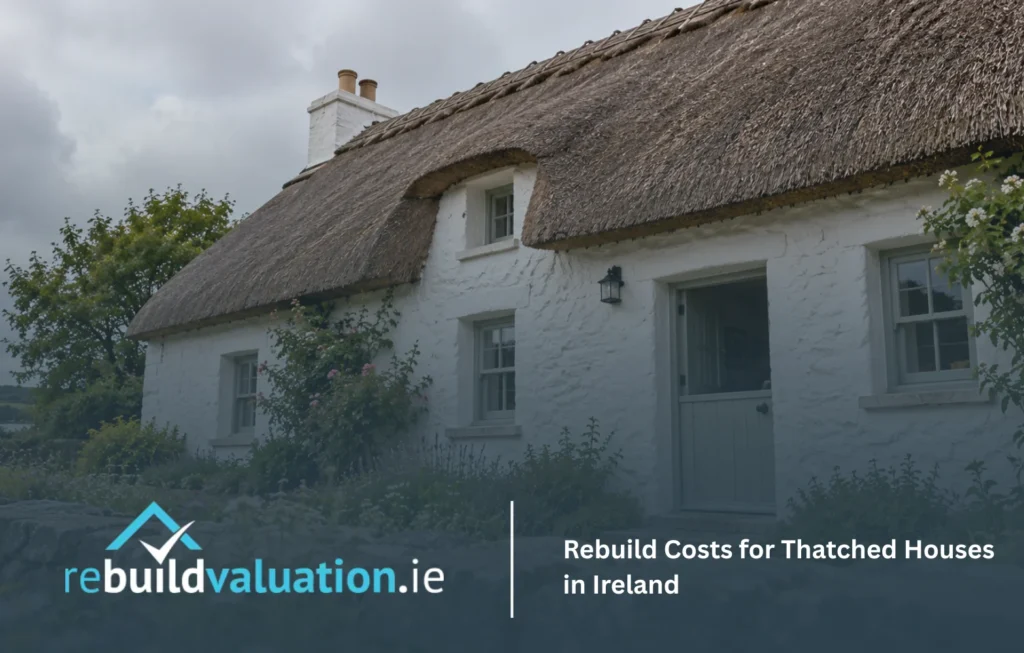
Thatched house rebuild costs in Ireland are typically higher than for a standard house, because the thatch, the skilled labour it needs and any traditional construction beneath it are all specialist work.
There is no standard rate to quote, and the most reliable figure comes from a chartered surveyor pricing your property element by element.
But cost is only part of it: the rules on what you must put back are a separate question, and a figure that ignores them can leave you short on the day you claim.
What Affects Thatched House Rebuild Costs in Ireland?
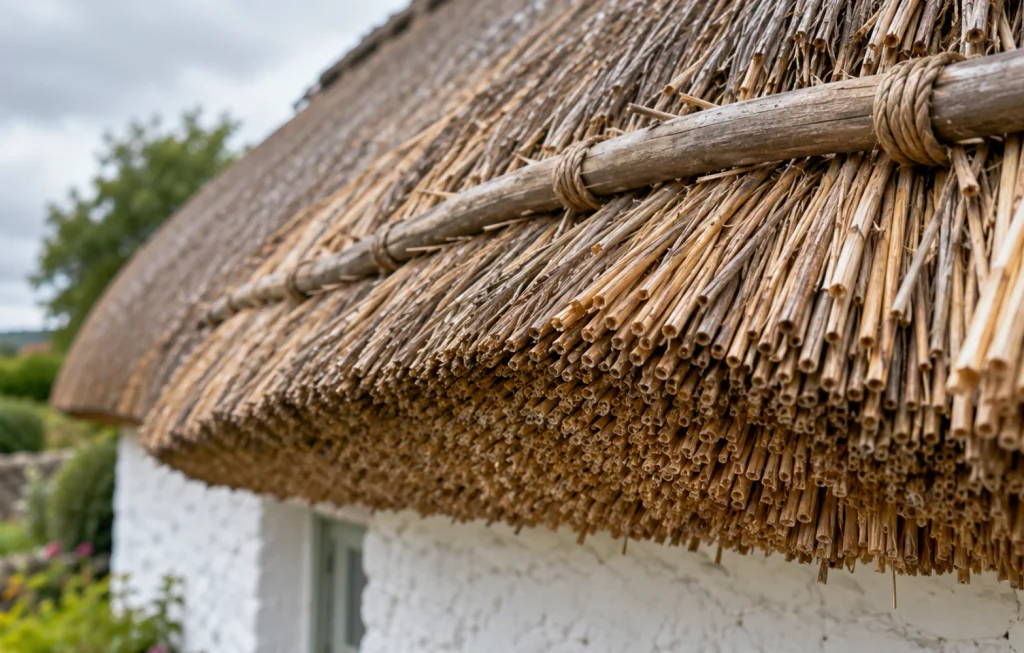
The roof is one of the main cost considerations. Thatch is a craft, not a roofing product. The conditions of the Department of Housing, Local Government and Heritage's Thatching Grant, covered below, show how specialist the work is. It should be done by an experienced tradesman skilled in thatching materials, using suitable straw or reeds, and a fully renewed roof should have a minimum thickness of 350mm on a firm and sound base. The Department's scheme for historic thatched buildings also refers to the rising cost of thatching.
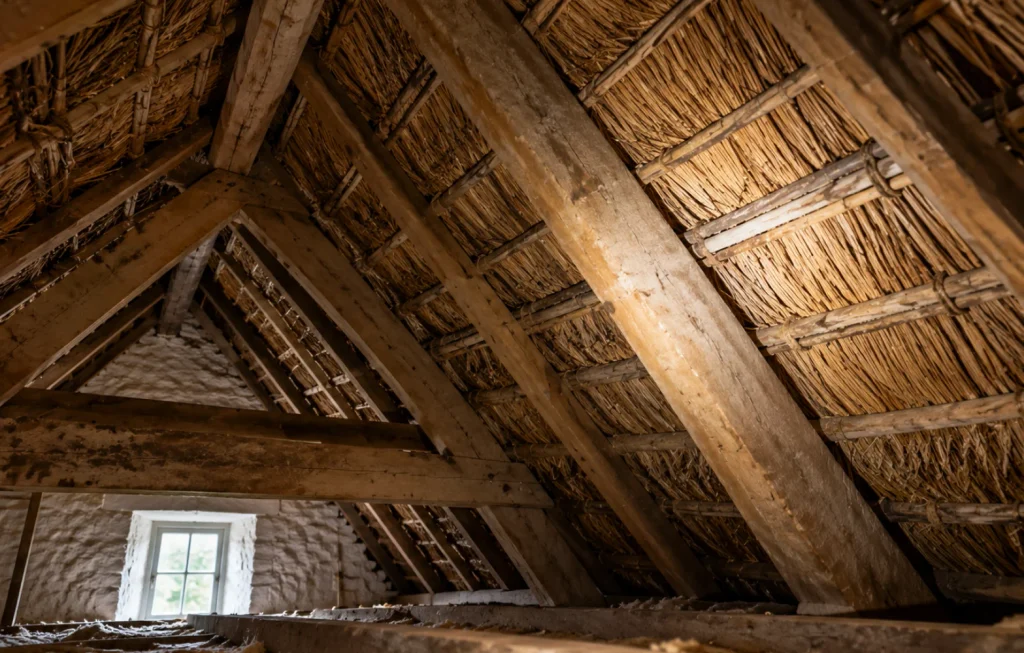
Then consider the construction beneath the thatch. Traditional thatched houses can have solid stone walls, lime mortar and lime plaster, carried on a timber roof structure shaped to take the thatch. Swapping those for block and render changes the house, and a standard rate never allows for what they cost.
The next question is whether the calculator from the Society of Chartered Surveyors Ireland (SCSI) can give you a starting point.
Does the SCSI Rebuild Calculator Work for Thatched Houses?
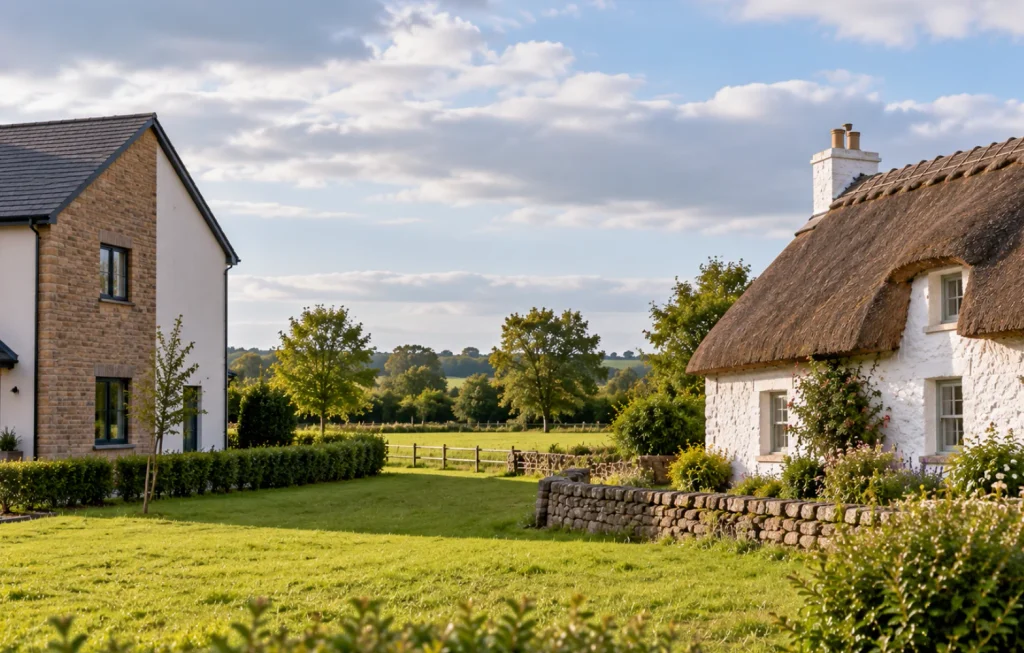
No. The SCSI rebuild calculator is part of SCSI's guide to calculating house rebuilding costs for insurance purposes, and it covers estate-type houses built in Ireland since the 1960s. That guide says it should not be used for one-off houses in the countryside or period properties, and that homeowners should consider professional advice in those cases. Many thatched houses are exactly that.
The danger is that it will still give you an answer. Enter a floor area, choose a house type and one of seven regions, and the calculator produces an estimated figure, with no allowance for how a thatched house is built. A home insured for that figure is insured for a number nobody has tested. Rebuild Valuation's guide to calculating your buildings sum insured explains what the calculator can and cannot do.
How Is a Thatched House Rebuild Cost Calculated?
By elemental cost analysis. A chartered surveyor prices the rebuilding of every element of the house, from foundations to finishes. Demolition, site clearance, professional fees and VAT are then added. That total is what your sum insured (the most your insurer will pay after a total loss) should rest on.
Several things move the figure on a thatched house that a calculator never asks about.
| Element | What moves the figure |
| Walls | How they are built and what mortar binds them |
| Thatch and roof | The type of thatch, and the pitch and complexity of the roof |
| Timber structure | The structure beneath the thatch |
| Chimneys, extensions and outbuildings | Each adds to the total |
| Site access | A narrow rural lane can add cost |
| Demolition and clearance | Removing whatever remains, including thatch debris, and clearing the site |
| Professional fees and VAT | Added to the cost of the building work |
VAT currently applies at 13.5% on building costs and 23% on professional fees. The finished total is the reinstatement cost, which is the surveyor's term for the rebuild cost.
An on-site reinstatement cost assessment is the basis of a thatched house insurance valuation. It is carried out by a Chartered Building Surveyor at a firm regulated by the Royal Institution of Chartered Surveyors (RICS), because the house has to be seen. Whoever you choose, ask how they will establish the construction method and materials. If the answer is only a floor area and a rate, ask what else they will measure.
Is There a Rebuild Cost per Square Metre for Thatched Houses?
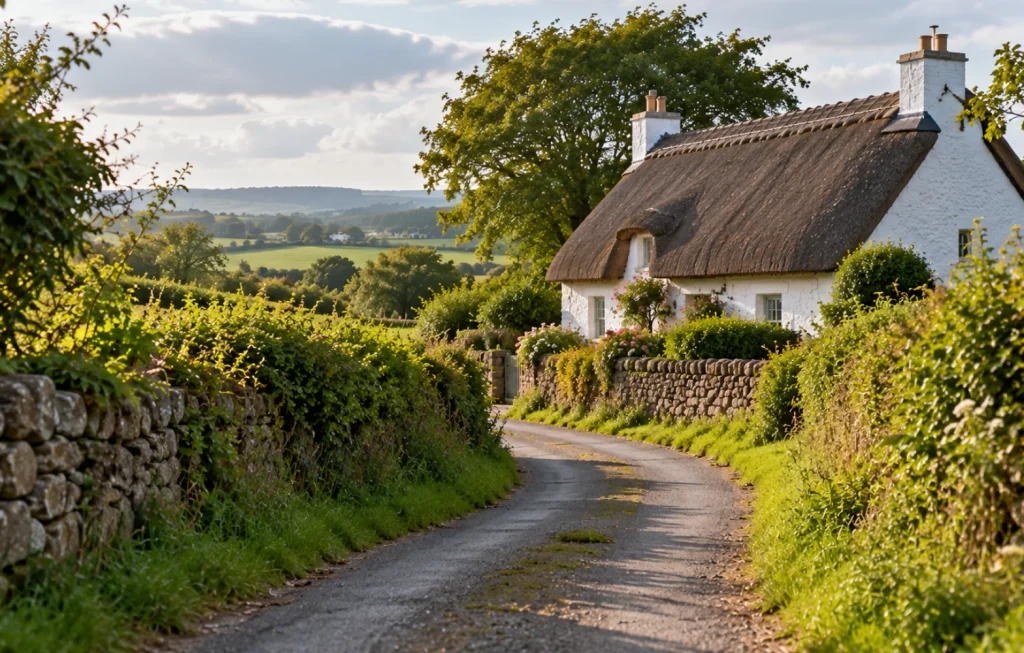
There is no reliable rate per square metre for thatched houses, because a rate only works when the houses it averages are alike. A thatched cottage rebuild cost can differ widely even when the floor area is the same. One cottage has stone walls, a steep reed roof and a long lane for access, and another has a simpler plan and an easy site. The same square metres, very different bills.
A re-thatching quotation covers only the roof.
Is Re-Thatching the Same as Rebuilding?
No, and mixing the two is an easy way to misjudge your cover. Repairs deal with damaged areas of thatch, re-thatching renews the whole roof covering, and reinstatement rebuilds the house after a loss.
| Re-thatching | Full reinstatement | |
| What it covers | The roof covering | The whole house after a loss |
| Who prices it | A thatcher | A chartered surveyor |
| What drives the price | Roof size and pitch, type of thatch, preparation work and scaffolding access | Every element of the house, plus demolition, clearance, fees and VAT |
| What it is for | Maintaining the roof | Setting the sum insured |
After a loss, the thatch is one element among many. A storm may strip part of the roof, while a fire can reach the timbers, ceilings and walls below it.
Planning rules can also affect how much of the house you must reinstate.
Does a Thatched House Have to Be Rebuilt Like for Like?
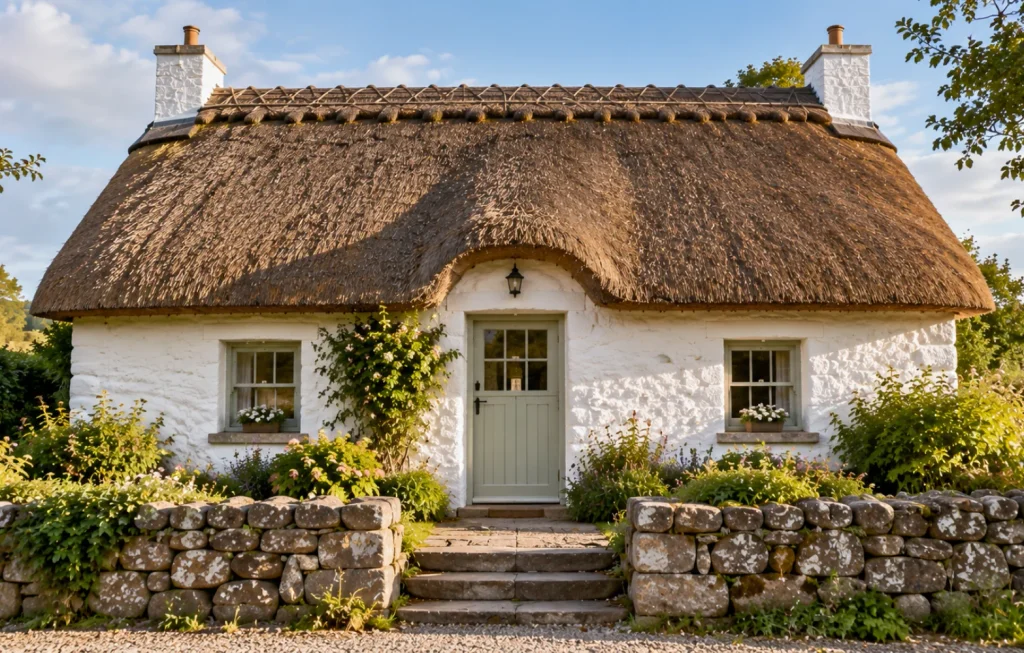
It depends on the house. Not every thatched house is a protected structure. A house is protected only when its local authority has added it to the Record of Protected Structures or proposed adding it. Many traditional cottages are valued as vernacular buildings without being listed. Your local authority's planning department or conservation officer can confirm where yours stands.
If the house is protected, or sits in an Architectural Conservation Area (an area whose character the local authority aims to preserve), the planning authority may expect like-for-like replacement after a loss. For a thatched house that can mean thatch again.
How much is required depends on how much of what made the house worth protecting survives the loss, so you can't predict it in advance. The safer course is a rebuild valuation that allows for reinstating the property to its condition before the loss. Our guide to rebuild costs for listed and protected buildings covers how that works in full.
What Grants Are Available for Thatched Houses in Ireland?
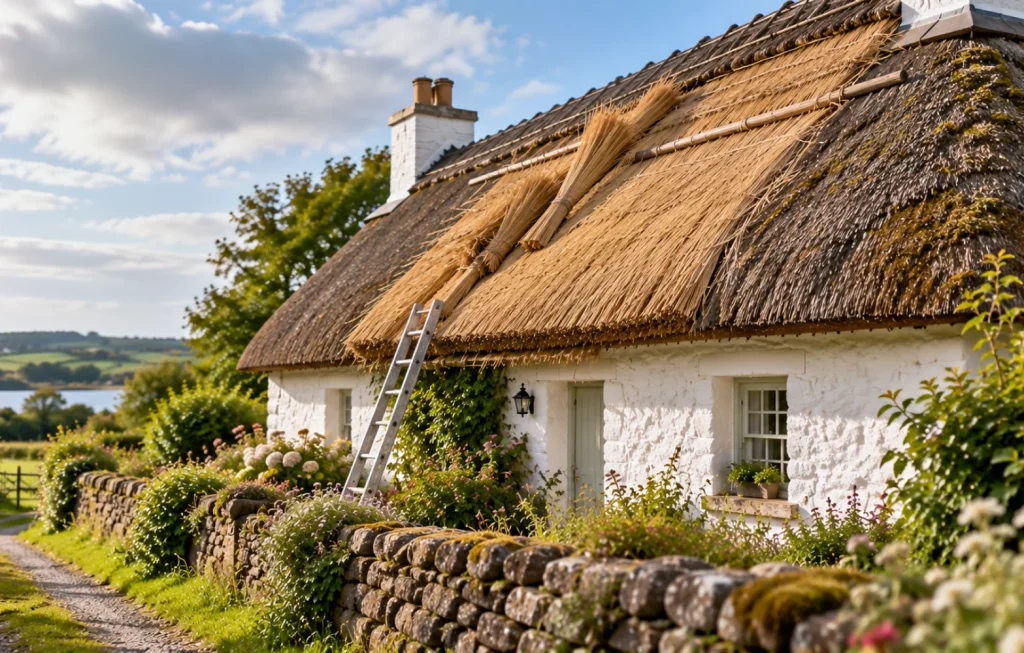
Two schemes apply: the Thatching Grant for thatched buildings in use as housing, and the Historic Thatched Buildings stream of the Built Heritage Investment Scheme.
The Thatching Grant is run by the Department of Housing, Local Government and Heritage. It pays up to €3,810 or two thirds of the approved cost, whichever is less, and up to €6,350 or 80% for medical card holders. The house must be your normal place of residence, and the Department must inspect it before work starts.
The Historic Thatched Buildings stream, the Historic Thatch Grant, offers funding of up to €20,000 depending on the type of building and the applicant, and covers any historic thatched structure, domestic or commercial. No applicant is guaranteed a set amount in any given year.
The Historic Thatch Grant is applied for through your local authority, and the Thatching Grant through the Department. Amounts, eligibility and application windows can change, so check the current terms before you plan around them.
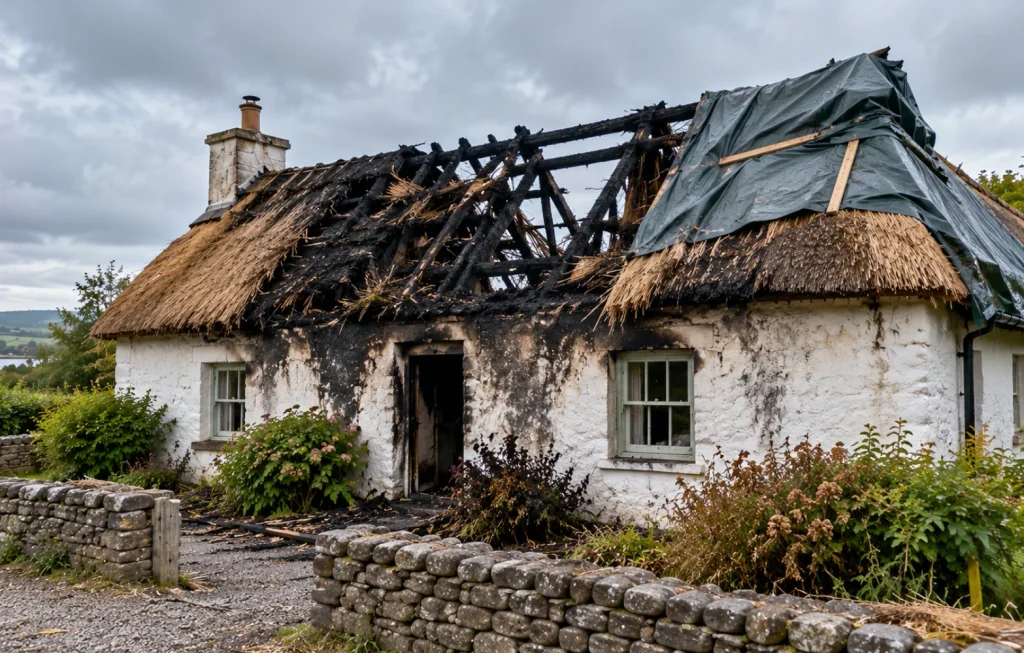
Whatever you receive, a grant pays towards repair, renewal and conservation work. It doesn't rebuild a house. If a fire takes the building, the money to reinstate it comes from your sum insured, so a figure that is too low leaves you carrying the difference.
What Happens if a Thatched House Is Underinsured?
An average clause is a policy condition that compares your sum insured with the true cost of rebuilding. Where your policy applies one, being underinsured can reduce what you receive on any claim, partial or total. Policies differ, so read your wording and ask your broker how your insurer treats it.
Here is an illustrative example only, not a prediction and not the price of any real roof. A thatched house is insured for €400,000, but a proper assessment puts the true rebuild cost at €500,000, so it is insured for 80 per cent of what it needs. A storm damages the roof and the timbers beneath it, and the repair costs €50,000. If the average clause applies, the insurer may pay 80 per cent, which is €40,000, and you cover the other €10,000. The example is simplified, so check your own policy wording.
The wrong number often starts with a sale price or a mortgage valuation, and both measure something else. The gap between market value and reinstatement cost can run in either direction on a rural property, so neither is a safe guide.
Your broker advises on the policy and your insurer sets its terms. A chartered surveyor supplies the number they both work from. A correct sum insured does not guarantee a particular payout, because what an insurer pays depends on the policy wording and the circumstances of the claim.
Frequently Asked Questions
How much does it cost to re-thatch a house?
It varies with the size and pitch of the roof, the type of thatch, the preparation work and access for scaffolding, so only a thatcher's written quote gives you a real number. That quote covers the roof alone. It isn't your rebuild cost, and it isn't your sum insured.
Is there a grant for a thatched roof in Ireland?
Yes. The Thatching Grant pays up to €3,810 or two thirds of the approved cost, whichever is less, for thatched homes lived in as a normal residence. The Historic Thatch Grant offers up to €20,000 for historic thatched structures. Check the current terms before you apply.
Is rebuild cost the same as market value?
No. Market value includes the land and the location. Reinstatement cost covers only the structure and everything needed to rebuild it. On a rural thatched house the two can sit far apart.
Do I need a reinstatement cost assessment for a thatched house?
Usually, yes, if your sum insured came from a calculator, a mortgage valuation or an estimate, or if the house has been extended or restored since.
When should you update a thatched house rebuild valuation?
Check your sum insured every year at renewal, and get a fresh professional assessment straight away after any extension, restoration or structural change. SCSI's 2025/26 guide, published on 4 November 2025, notes that insurers recommend reassessing your cover every year, allowing for any improvements or extensions. The calculator isn't built for one-off or period houses, which many thatched houses are, but that advice holds for any house. How often a thatched house needs a full on-site assessment is a question for your surveyor.
Is a thatched house a protected structure?
Not automatically. A house is protected only if it is on its local authority's Record of Protected Structures or has been proposed for it, and it may also sit inside an Architectural Conservation Area.
Book a RICS Reinstatement Cost Assessment in Ireland
If your current figure came from a calculator, a mortgage valuation or an estimate, it has never been tested against the house itself. Your next renewal is a sensible moment to change that.
You receive a written RICS report with a declared value, the full reinstatement cost the assessment produces, so any claim starts from a documented figure. Rebuild Valuation specialises in reinstatement cost assessments, and its on-site assessments are carried out by a Chartered Building Surveyor at an RICS-regulated firm, for owners, brokers and managing agents across Ireland.
Book my reinstatement cost assessment using the enquiry form, or call the office on +353 (01) 870 9210 to talk through your house first.